
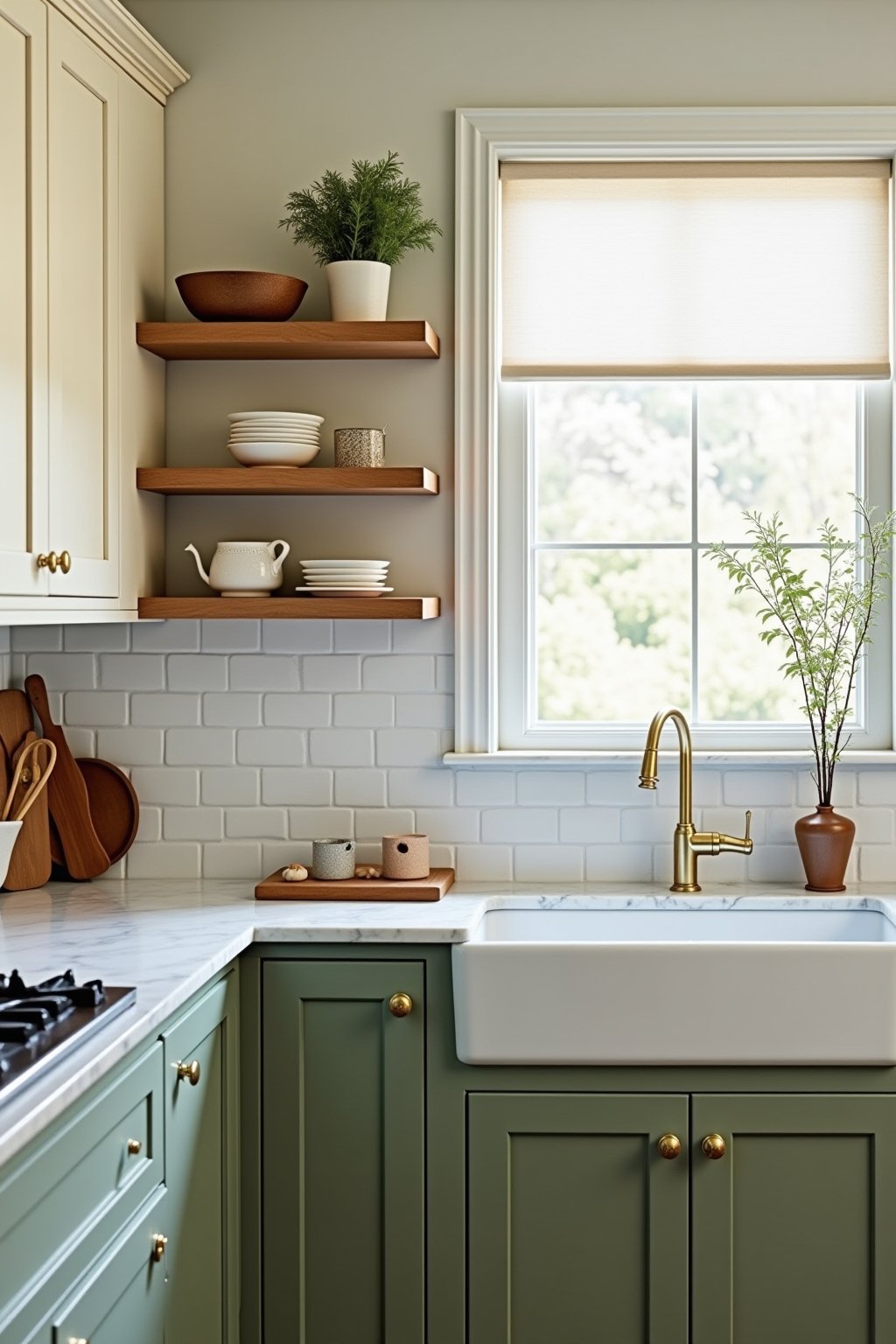
There’s something about sage green that just feels right in a kitchen. It’s the color of fresh herbs, morning garden light, and that perfectly calm feeling you get when everything is in its place. Paired with cream, it creates the kind of kitchen that makes you want to slow down and actually enjoy cooking.
This combination has exploded on Pinterest with searches up over 400% this year. And honestly, I get it. Sage green and cream is that rare color combo that feels both trendy and timeless — modern enough to look fresh, classic enough that you won’t regret it in five years.
Why This Works
- Naturally calming — green is proven to reduce stress and promote relaxation, perfect for the heart of your home
- Warm and inviting — unlike cool gray kitchens, sage and cream feel welcoming from the moment you walk in
- Pairs with everything — works with brass, wood, marble, concrete, and nearly any accent color
- Timeless appeal — green kitchens have been beloved in design since the 1920s, so this isn’t a flash-in-the-pan trend
- Versatile range — sage green works as cabinets, walls, tile, or just accessories depending on your comfort level
What You’ll Need
Essential elements for the sage green and cream kitchen:
- Sage green paint — for cabinets or walls (warm sage, not gray-green)
- Cream paint or tile — for the balancing neutral surfaces
- Warm hardware — brass or gold knobs and pulls
- Natural wood elements — shelving, cutting boards, or a butcher block island top
- White or cream backsplash — subway tile, penny tile, or natural stone
- Warm textiles — linen tea towels, cream curtains, woven placemats
Step-by-Step Guide
Find Your Perfect Sage
Sage green is a broad category. For kitchens, you want a true sage — a muted, gray-green with warm undertones. Avoid anything too bright (that’s mint) or too dark (that’s hunter). The right sage feels sophisticated and organic.
Top paint picks: Benjamin Moore “Sage Wisdom” or “October Mist,” Sherwin-Williams “Evergreen Fog,” or Farrow & Ball “Vert De Terre.”
Decide Your Layout
The most popular approach is sage lower cabinets with cream uppers. This keeps the kitchen bright while grounding it with color. Other options: all sage cabinets with cream walls, sage island with cream perimeter cabinets, or sage walls with cream cabinets.
Test your chosen layout with large paint samples before committing. Live with them for at least a week in different lighting conditions.
Choose Your Cream Tone
Not all creams are created equal. Choose a cream with warm undertones that complements your sage. Cool whites will make the sage look sickly. Test cream swatches right next to your sage green sample.
The cream should feel warm and natural, almost like fresh butter or vanilla. Benjamin Moore “White Dove” or “Navajo White” are reliable choices.
Add Warmth with Wood and Brass
Natural wood floating shelves, a butcher block section on the island, or a reclaimed wood range hood all add essential warmth. Pair with brass or unlacquered brass hardware for a cohesive, nature-inspired palette.
The combination of green, cream, wood, and brass creates a kitchen that feels like a curated space rather than a showroom.
Style with Natural Textures
Finish the space with linen tea towels, woven rattan baskets, ceramic canisters, and of course, actual herbs. A small herb garden on the windowsill ties the sage green color directly to nature.
Keep countertop accessories minimal and intentional. A wooden cutting board, an olive oil dispenser, and a small plant is all you need.
Common Mistakes to Avoid
- Choosing a mint green instead of sage — mint is too bright and reads as retro-1950s. True sage is muted and sophisticated
- Using pure white instead of cream — stark white makes sage green look washed out. Warm cream creates harmony
- Forgetting warm metals — chrome or brushed nickel fight against the warmth of sage. Always go brass or gold
- Over-accessorizing with green — once your cabinets are sage, your accessories should be neutral, wood, and brass
- Ignoring lighting temperature — cool daylight bulbs make sage look gray. Use warm 2700K-3000K bulbs
Budget Tips
Sage green and cream is surprisingly budget-friendly:
- Paint existing cabinets sage green — one of the cheapest kitchen transformations possible
- Use peel-and-stick tile in a cream subway pattern for the backsplash
- Shop thrift stores for brass hardware, vintage ceramic canisters, and wooden cutting boards
- Add sage through just paint and textiles if you can’t commit to cabinets (walls + tea towels + curtains)
- DIY open shelving using wood brackets and pre-cut boards from the hardware store
Styling Tips
- Layer multiple greens — use sage, olive, and eucalyptus tones for depth without being matchy-matchy
- Display cookbooks on open shelves — their varied colors add interest while keeping the look organized
- Use terracotta pots for herbs — the warm orange-brown of terracotta is sage green’s perfect complement
- Add a woven rug — a natural jute or sisal rug warms the floor and adds texture underfoot
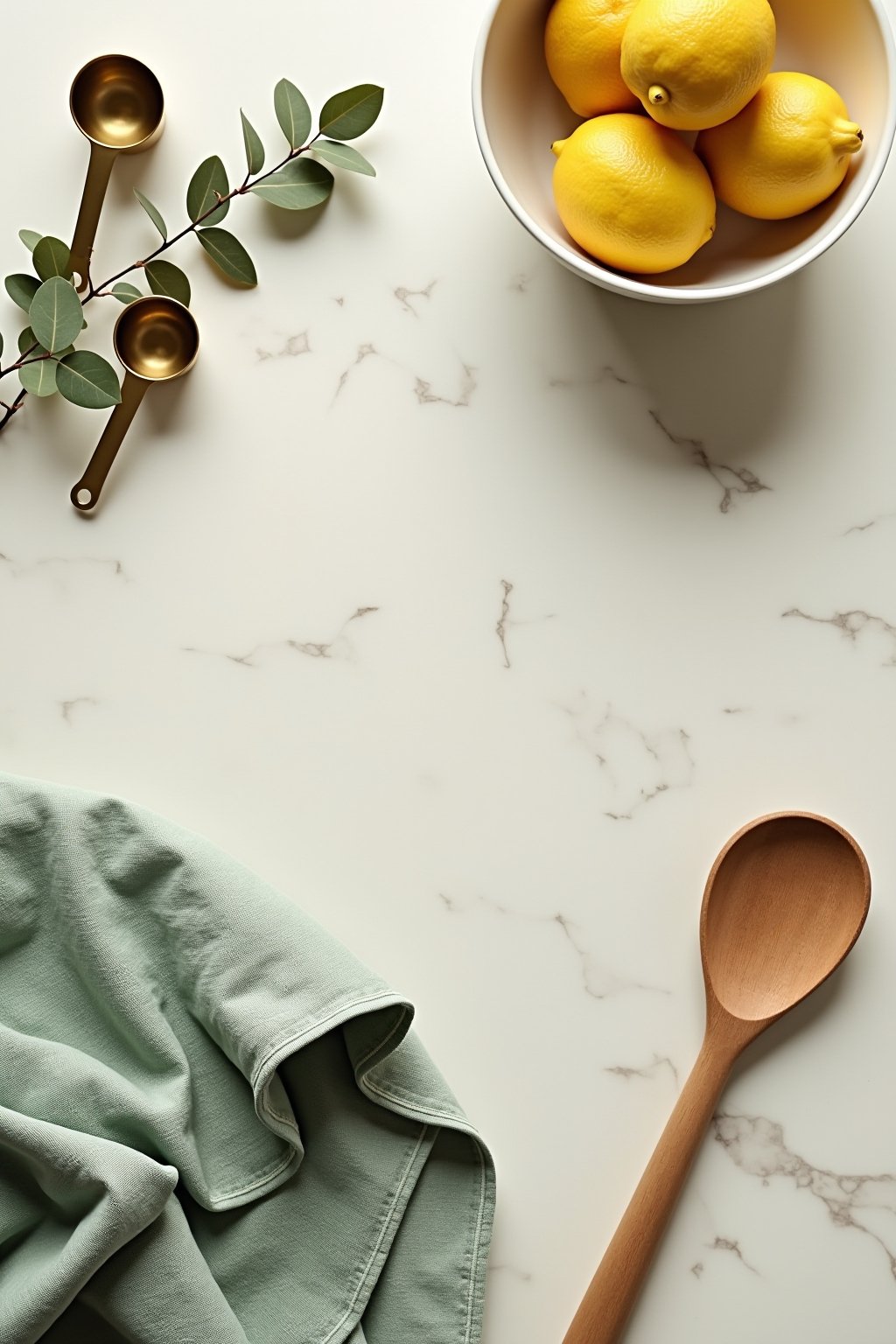
- Style your counters with wood — cutting boards, wooden spoons in a crock, and a wooden bowl create warmth
- Keep one area of contrast — a black pendant light or dark stone countertop prevents the look from being too soft
Room-by-Room Inspiration
Small Kitchen
Paint lower cabinets sage and use open shelving instead of upper cabinets. The open shelving keeps the space feeling airy while the sage adds personality. Cream walls and a simple tile backsplash complete the look.
Large Family Kitchen
In a big kitchen, go all sage cabinets with a cream marble island countertop as the focal point. Add warm wood floating shelves, brass lighting, and a runner rug for a collected, welcoming feel.
Galley Kitchen
Use sage on one side and cream on the other to create depth. The two-tone approach makes a narrow galley feel wider and more interesting than a single color.
Frequently Asked Questions
What shade of sage green is best for kitchen cabinets?
Look for a muted, warm sage green — not too bright (mint) or too dark (hunter). Benjamin Moore ‘October Mist’ and Sherwin-Williams ‘Evergreen Fog’ are two of the most popular and reliable choices.
Does sage green work in a small kitchen?
Yes, especially as lower cabinets paired with cream or white uppers. The combination keeps the upper part of the room light while adding personality below eye level.
What countertop color pairs best with sage green cabinets?
White marble, cream quartz, butcher block, and light concrete all work beautifully. The countertop should be lighter than the cabinets for contrast and brightness.
Is sage green a timeless kitchen color?
Green kitchens have been a design staple since the 1920s. While specific shades trend up and down, warm sage green is one of the most enduring kitchen colors in design history.
Can I pair sage green with black accents?
Absolutely. Black hardware, a black range, or black pendant lights add striking contrast to a sage and cream kitchen. Just use black sparingly so it doesn’t overwhelm the soft palette.
What wall color works with sage green cabinets?
A warm cream or soft white is the safest choice. You can also try a very light sage (almost white-green) for a subtle tone-on-tone effect that feels cohesive and sophisticated.