
Weeds are the number one frustration for every gardener, and it feels like they grow faster than anything you actually want in your garden. But reaching for chemical herbicides is not the answer — especially if you are growing food, have pets, or care about the health of your soil.
The good news is that natural weed control methods are not just feel-good alternatives. When used correctly, they are genuinely effective and many of them prevent weeds from ever appearing in the first place. The real secret is understanding that weed control is mostly about prevention, not killing. Once you shift your strategy from reactive to proactive, you will spend dramatically less time pulling weeds and more time enjoying your garden.
Quick Facts
| Sun | N/A |
| Difficulty | Beginner |
| Season | Year-round (prevention starts early spring) |
| Zone | All USDA Zones |
| Time to Harvest | N/A |
What You Need for Natural Weed Control Methods That Actually Work
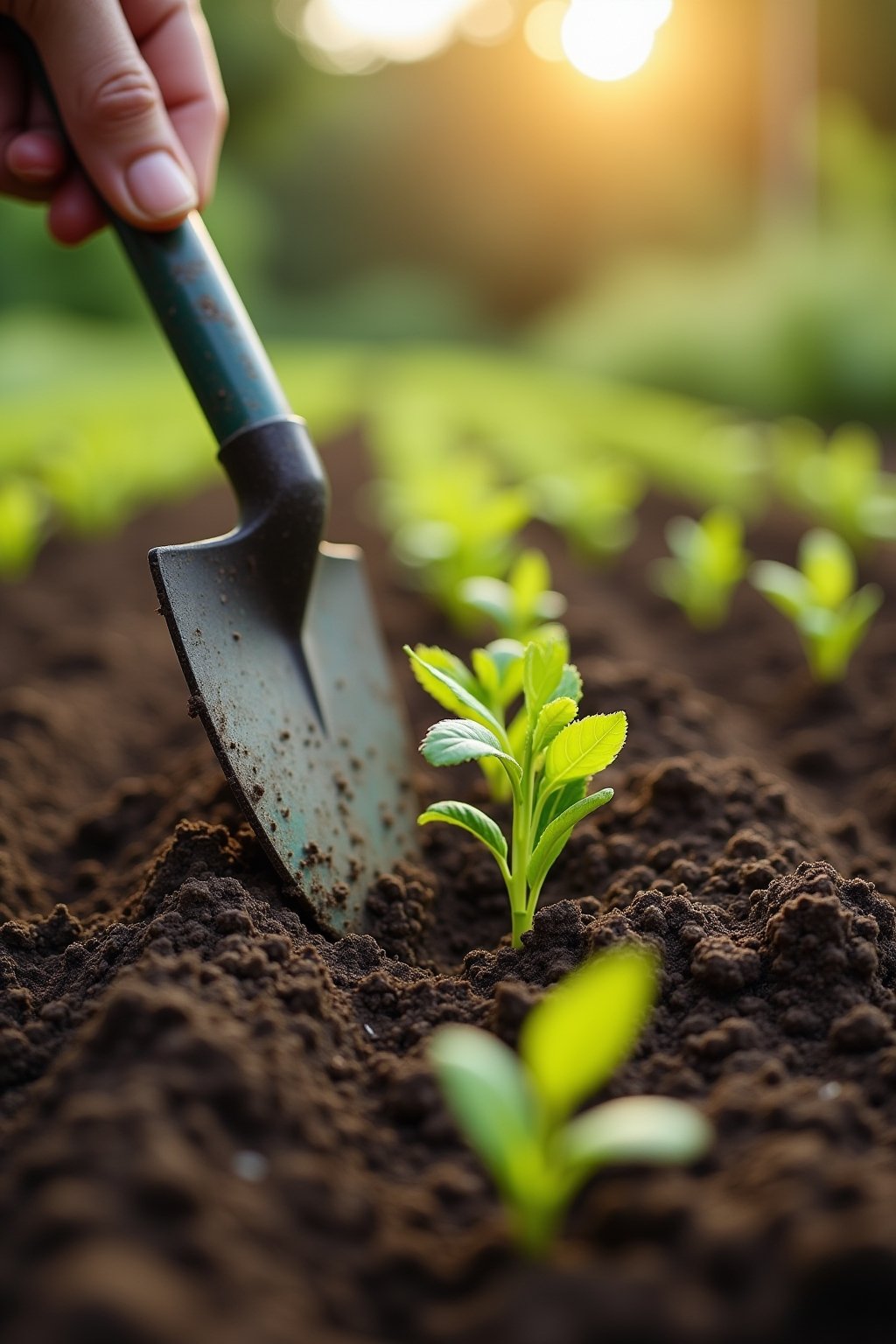
- Cardboard or newspaper (for sheet mulching)
- Organic mulch (straw, wood chips, shredded leaves)
- White vinegar (20% horticultural strength for tough weeds)
- Boiling water (for driveway/path weeds)
- Corn gluten meal (pre-emergent)
- Stirrup hoe or collinear hoe
- Landscape fabric (for paths only, not garden beds)
- Garden fork for deep-rooted perennial weeds
- Spray bottle for targeted vinegar application
- Weed torch/flame weeder (optional, for hardscape)
Mulch is your best friend: A 3-4 inch layer of organic mulch blocks light and prevents 90% of weed seeds from germinating. Wood chips, straw, and shredded leaves all work. This single strategy eliminates more weeds than any spray or tool.
Vinegar strength matters: Household vinegar (5%) only kills the tops of young weeds temporarily. Horticultural vinegar (20%) is much more effective but can burn skin — wear gloves and eye protection. Neither kills roots of established perennial weeds.
Corn gluten meal is a natural pre-emergent that prevents seeds from germinating. Apply in early spring before weed seeds sprout. It does not kill existing weeds.
Step 1: Mulch Everything (The 90% Solution)
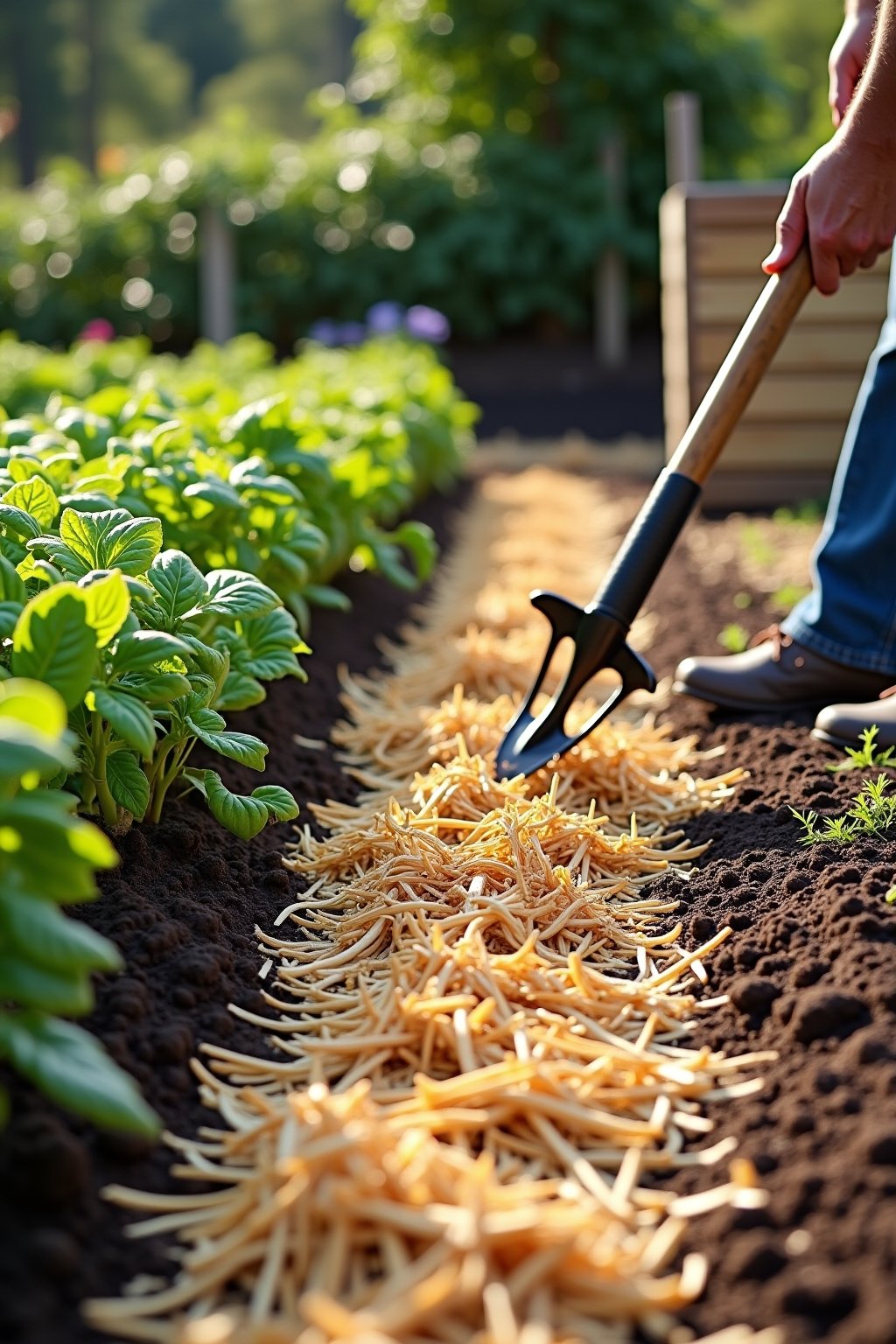
The single most effective weed control strategy is thick organic mulch. Spread 3-4 inches of straw, wood chips, or shredded leaves over every bare soil surface in your garden. Mulch blocks sunlight from reaching weed seeds, preventing them from germinating in the first place. It also retains soil moisture, regulates temperature, and feeds beneficial soil organisms as it decomposes.
Apply mulch in spring after the soil warms up, and top it off mid-season if it thins out. Keep mulch a few inches away from plant stems to prevent rot. In vegetable beds, straw is ideal because it is light, inexpensive, and easy to move aside when planting.
Step 2: Use Cardboard Sheet Mulching for New Beds
If you are creating a new garden bed in a weedy area, sheet mulching is the most effective natural method. Lay overlapping sheets of cardboard or 8-10 layers of newspaper directly on top of the weeds. Cover with 4-6 inches of compost and mulch on top. The cardboard smothers existing weeds and their seeds while decomposing into the soil over several months.
This method works best when applied in fall for spring planting, but you can do it any time. For immediate planting, cut holes in the cardboard where you want to place transplants. The surrounding cardboard continues to suppress weeds while your plants establish.
Step 3: Hoe Weeds When They Are Tiny
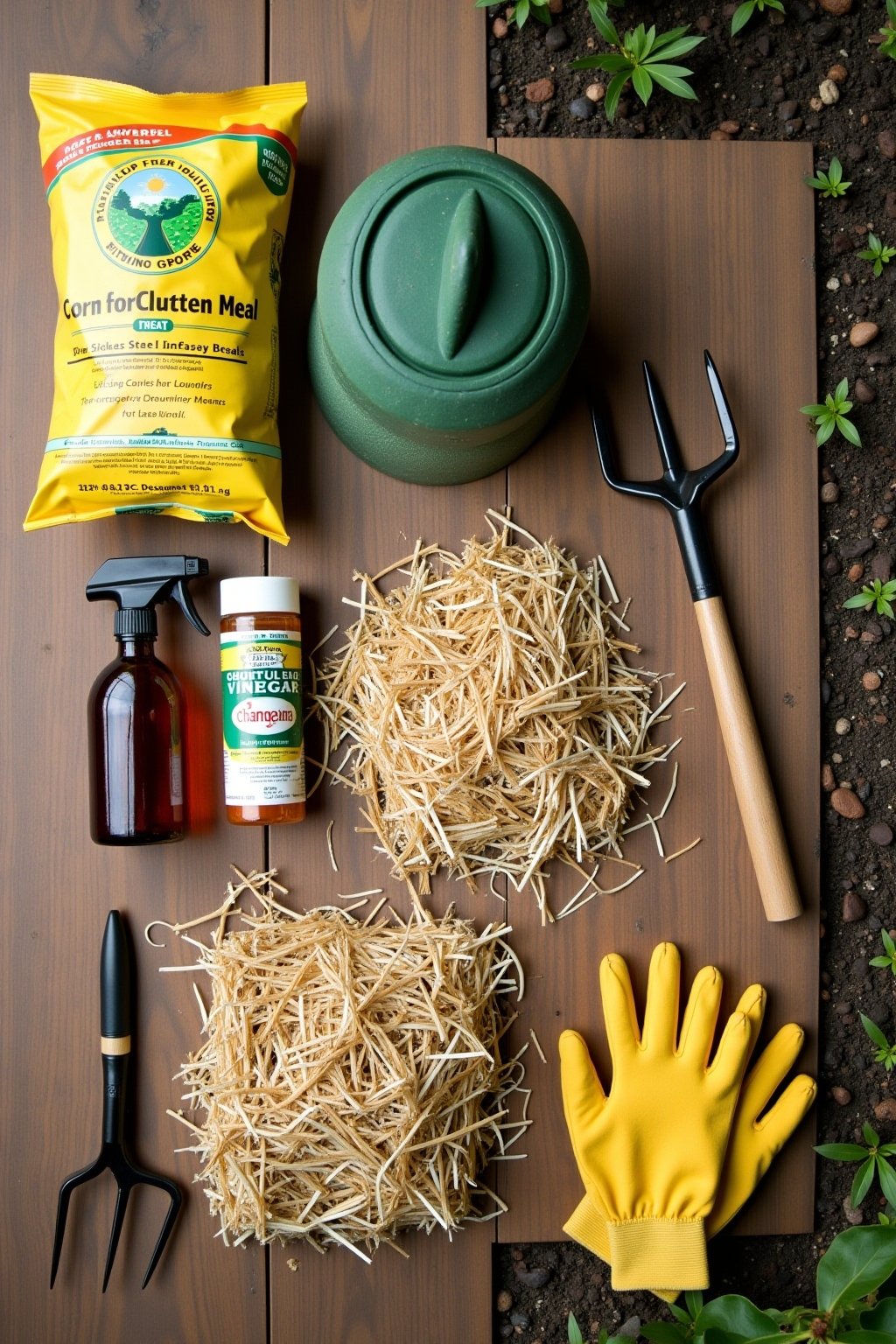
The easiest time to kill a weed is when it is barely visible — a tiny white thread of root with one or two seed leaves. At this stage, a quick pass with a stirrup hoe or collinear hoe kills hundreds of weeds in minutes by slicing them just below the soil surface. This is infinitely easier than pulling established weeds with deep roots.
Walk your garden once a week during the growing season and hoe any tiny weeds you see. This takes 5-10 minutes and prevents them from ever becoming a problem. The goal is to never let a weed get big enough to seed — one mature weed can produce thousands of seeds that create problems for years.
Step 4: Pour Boiling Water on Path and Driveway Weeds
For weeds growing in cracks in driveways, patios, and walkways, boiling water is incredibly effective and costs nothing. Simply boil a kettle and pour it directly on the weed. The heat destroys the plant cells on contact. It works on young annual weeds immediately and may need 2-3 applications for tougher perennial weeds.
This method is completely safe for the environment, kills instantly, and is satisfying to watch. The only downside is that it kills everything it touches, so use it only on hardscape areas — not near desirable plants.
Step 5: Apply Vinegar Spray for Targeted Weed Killing
Horticultural vinegar (20% acetic acid) kills the top growth of weeds on contact. Use it in a spray bottle for targeted application on individual weeds, especially in paths, gravel areas, and edges. Apply on a hot, sunny day for maximum effectiveness — the combination of acid and sun damage is much more lethal than either alone.
Important limitations: vinegar only kills what it touches above ground. It does not kill roots of established perennial weeds like dandelions or bindweed. For those, you will need repeated applications or physical removal. Keep vinegar spray away from desirable plants — it does not discriminate.
Step 6: Apply Corn Gluten Meal as a Natural Pre-Emergent
Corn gluten meal is a natural byproduct of corn processing that prevents weed seeds from germinating when spread on the soil surface. Apply 20 lbs per 1,000 square feet in early spring, 4-6 weeks before weed seeds typically sprout in your area. It works by inhibiting root formation in germinating seeds.
Corn gluten meal works best as part of a multi-year strategy — it becomes more effective with each annual application. Important: it prevents ALL seeds from germinating, so do not use it in areas where you plan to direct-sow vegetable or flower seeds. It is safe to use around established transplants and perennials.
Common Problems and How to Fix Them
Weeds keep coming back after pulling: You are likely dealing with perennial weeds with deep root systems (dandelion, bindweed, quack grass). These must be dug out completely — every root fragment left behind regrows. Use a garden fork to loosen the soil deeply and extract the entire root.
Mulch isn’t stopping weeds: Your mulch layer is probably too thin. You need 3-4 inches for effective suppression. Also check if weeds are growing through from below (perennial roots push through thin mulch) or if weed seeds are blowing in and germinating on top of decomposing mulch.
Vinegar killed my plants too: Vinegar is non-selective — it damages any plant tissue it contacts. Use a spray bottle instead of a sprayer for precise application, and spray on calm days with no wind. Shield nearby plants with cardboard when spraying.
Corn gluten meal didn’t work: Timing is everything. It must be applied 4-6 weeks before weed seeds germinate and needs to stay dry for 2-3 days after application to be effective. Rain immediately after applying washes it in too deep. Also, it only works on seeds — not on existing weeds.
Seasonal Guide
Early Spring: Apply corn gluten meal 4-6 weeks before typical weed emergence. Refresh mulch layers to 3-4 inches. Pull any perennial weeds that survived winter while the soil is moist and roots come out easier.
Spring-Summer: Hoe weekly when weeds are tiny. Top off mulch as it decomposes. Use boiling water or vinegar on hardscape weeds. Never let weeds go to seed — one plant can drop 10,000+ seeds.
Fall: Sheet mulch any new bed areas you plan to use next spring. Apply a thick layer of leaves or straw over vegetable beds after harvest to smother fall weed germination and protect soil over winter.
Winter: Minimal weed activity. Plan your mulching strategy for spring. Order corn gluten meal if using it. Sharpen your hoe.
Expert Tips
- Never let a weed go to seed — this is the golden rule. One dandelion produces 15,000 seeds. One pigweed produces 100,000. Removing weeds before they seed prevents years of future problems.
- Mulch 3-4 inches thick, not 1-2 — a thin layer of mulch actually helps weeds by moderating soil temperature. You need enough depth to completely block light from reaching the soil surface.
- Weed after rain — pulling weeds from moist soil is 10 times easier than from dry, compacted soil. The roots slide out intact instead of breaking off and regrowing.
- Hoe on a dry sunny morning — tiny weed seedlings sliced by a hoe on a hot morning shrivel and die within hours. If you hoe before rain, the uprooted weeds can re-root.
- Use landscape fabric ONLY for paths — fabric in garden beds creates a maintenance nightmare. It degrades, weeds root into it, and it prevents you from adding compost. Use mulch instead.
- Embrace some weeds — not all weeds are bad. Clover fixes nitrogen, dandelions have deep taproots that break up compacted soil. A few weeds in a garden bed are normal and healthy.
Related Articles
Looking for more gardening guides? Check out these favorites:
- The Complete Guide to Raised Bed Vegetable Gardening
- How to Prepare Your Garden Soil for Spring Planting (Step-by-Step)
Frequently Asked Questions
Does vinegar really kill weeds permanently?
Vinegar kills the top growth of weeds but does not kill the roots of established perennial weeds. Annual weeds (like chickweed and purslane) are killed effectively. Perennial weeds (dandelion, bindweed) will regrow from the roots and need repeated applications or physical removal. Horticultural vinegar (20%) is much more effective than household vinegar (5%).
How thick should mulch be to stop weeds?
3-4 inches of organic mulch effectively blocks most weed seeds from germinating. Less than 3 inches is too thin and weeds will push through. More than 6 inches can suffocate plant roots and cause moisture problems. Reapply as needed throughout the season as mulch decomposes.
Is pulling weeds or hoeing them better?
It depends on the weed. For tiny annual weed seedlings, hoeing is faster and easier. For established perennial weeds with deep roots, pulling (or digging with a fork) is necessary to remove the entire root system. The key is catching weeds when they are small — at that stage, hoeing is by far the most efficient method.
Can I use salt to kill weeds?
Salt kills weeds but it also sterilizes the soil — nothing will grow in salted soil for months or years. Never use salt in garden beds. It can also leach into surrounding areas and kill nearby plants. Use it only on driveways or gravel areas where you never want anything to grow, and use it sparingly.
What is the best natural pre-emergent?
Corn gluten meal is the most researched and effective natural pre-emergent. Apply 20 lbs per 1,000 sq ft in early spring before weed seeds germinate. It prevents root formation in germinating seeds. Thick mulch is also an excellent pre-emergent — it blocks light and prevents germination.
Are weeds bad for my garden?
Some weeds compete with your plants for water, nutrients, and light. But not all weeds are harmful — clover fixes nitrogen, dandelion roots break up compacted soil, and many weeds attract beneficial insects. The goal is managing weeds to an acceptable level, not eliminating every single one.