
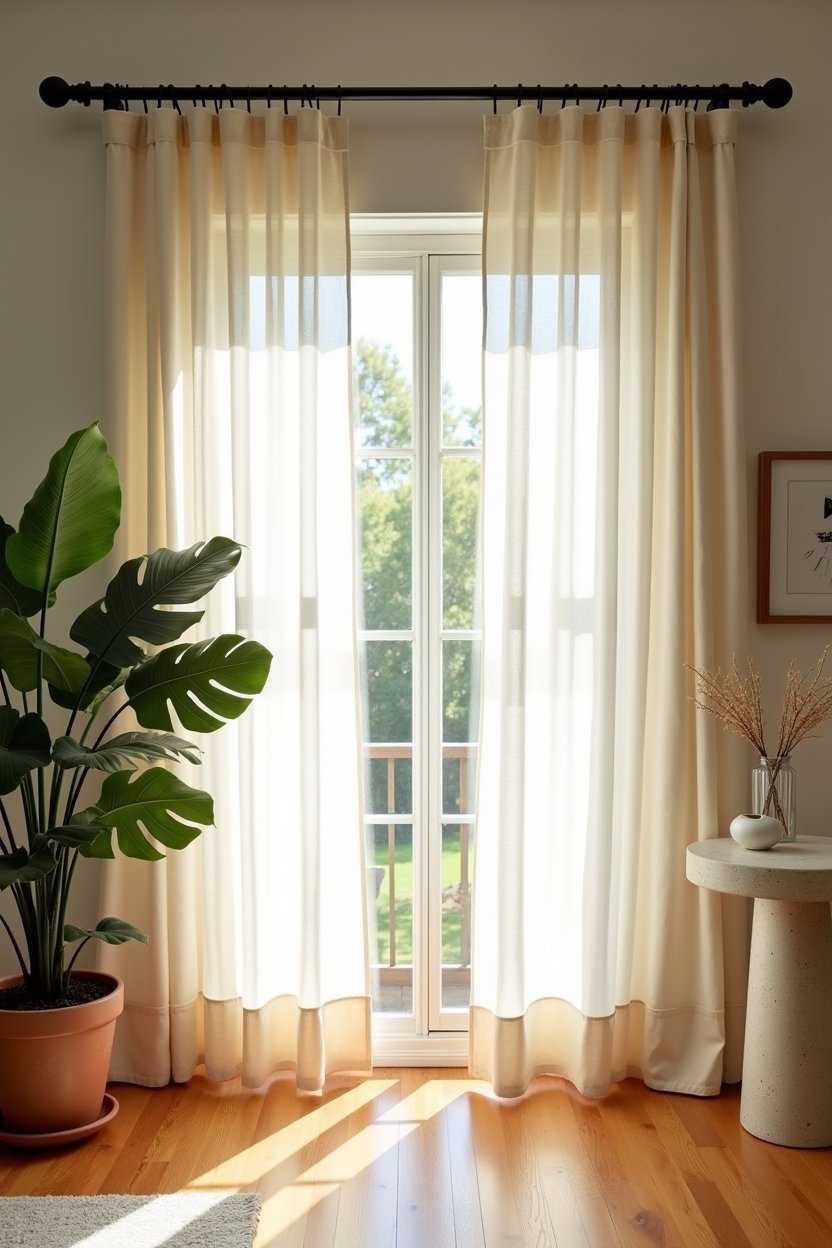
Why Layered Window Treatments Are Having a Major Moment in 2026
A single curtain panel — even a beautiful one — cannot do everything a window needs it to do. It can’t filter morning light softly while also blocking late afternoon glare. It can’t provide nighttime privacy while keeping daytime airiness. And it certainly can’t create the kind of lush, architectural window moment that makes a room feel designed rather than decorated.
Layering does all of that. The combination of a sheer or linen light-filtering layer with a blackout or room-darkening layer gives you complete light control at any time of day. This guide covers everything: which layers to combine, how to measure and hang correctly, which hardware to use, and the smartest products available in 2026 to get the job done beautifully.
Understanding the Two-Layer System
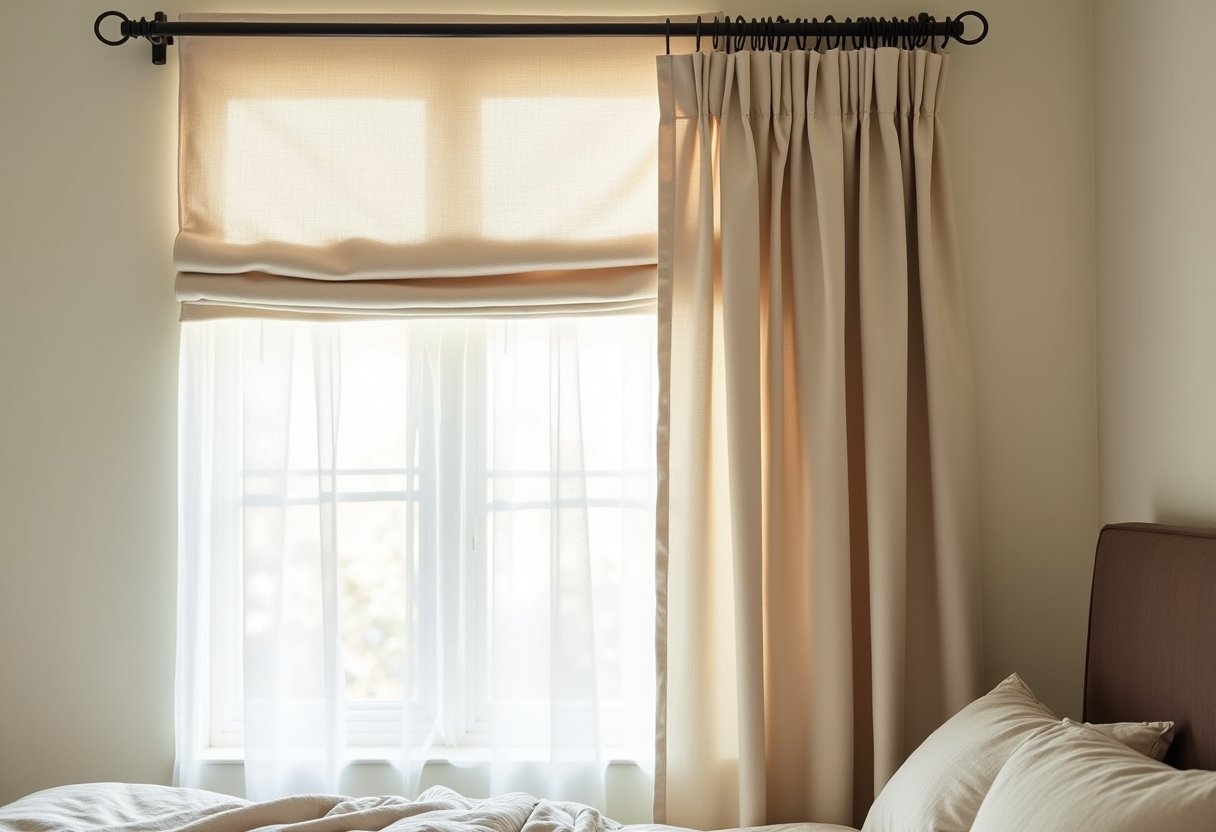
The foundation of every great layered window treatment is simple: a back layer and a front layer. The back layer sits closest to the window glass and controls light. Options include sheer panels for diffused natural light, or a Blackout Cellular Shade for genuine darkness — the honeycomb cells also trap air and help insulate the window, reducing heating and cooling costs year-round. The front layer hangs in front and is predominantly about aesthetics.
The Case for Natural Linen Drapes
Of all the fabric options for the front layer, linen is the standout choice for 2026. Linen has a natural, slightly rumpled texture that catches light in a way that synthetic fabrics simply cannot replicate. Linen Blend Curtain Panels are available in lengths and colors that fit perfectly into 2026’s organic modern palette. Always steam or lightly iron your panels before hanging — the natural wrinkle of linen is charming; the deep fold lines from packaging are not.
Smart and Motorized Curtain Rods: The 2026 Upgrade
A Motorized Smart Curtain Rod eliminates the daily friction of managing layered window treatments. When you have both a back shade and front curtain panels, manually adjusting both layers multiple times a day becomes genuinely annoying. A motorized front rod means your morning routine can include curtains opening automatically. Most smart curtain rods now integrate with Amazon Alexa, Google Home, and Apple HomeKit.
How to Hang Curtains for Maximum Impact
- Hang as high as possible. Mount your curtain rod 4–6 inches below the ceiling, not just above the window frame.
- Go wider than the window. Your rod should extend 6–12 inches beyond the window frame on each side.
- Let them touch the floor. Curtains that float above the floor look accidental. They should just kiss the floor or puddle slightly.
- Use enough fabric. Each panel should be at least 1.5x the width of the space it needs to cover. For a full, luxurious look, aim for 2x.
Curtain Rings, Clips and the Hardware That Matters
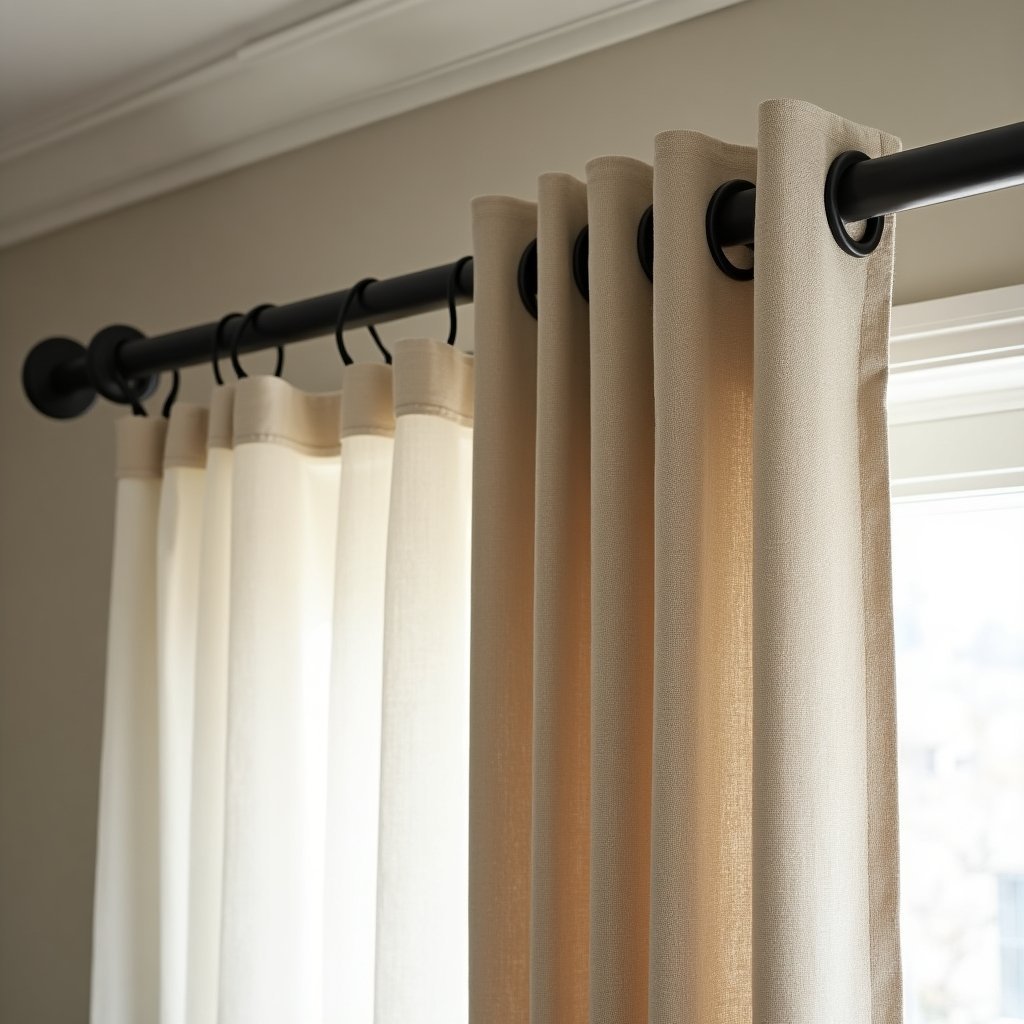
Curtain Rings with Clips are the most versatile hanging system for linen and natural fiber panels. The clip-top system means you can hang panels without any sewing or grommets — just clip directly onto the fabric, creating a beautiful soft fold at the top. For the back layer, a Tension Rod for Layering inside the window frame can hold a lightweight sheer, leaving your outer rod free for the heavier linen front panels.
Room-by-Room Layering Guide
- Primary Bedroom: Blackout cellular shade + linen blend panels on a motorized rod. Total darkness for sleep, beautiful aesthetics for everything else.
- Living Room: Sheer white or natural panels (back) + linen or velvet front panels. Keep sheers visible at the sides for an airy look even when front panels are open.
- Home Office: Light-filtering roller shade (back) + a single linen panel pushed fully to the side during work hours.
- Nursery: Full blackout cellular shade + lightweight cotton or linen panels. The blackout layer is non-negotiable for nap times.
Final Tips for a Designer-Level Result
Steam your panels every season to refresh the drape. Keep panel colors in the same tonal family as your walls for a seamless, elongated look. Always order sample swatches before committing to fabric color online — curtain colors shift dramatically depending on natural versus artificial light in your specific space. Don’t underestimate the impact of finials (the decorative end caps on your rod). A beautiful finial in brushed brass or matte black completes the entire installation.