Why Your Console Table Is the Most Underrated Surface in Your Home
Walk into any beautifully small home decor changesated home and you will almost always find a console table that stops you in your tracks. It is not an accident. Interior designers treat the console table as a visual anchor — a place where personality, function, and artistry collide in a narrow strip of surface space. Whether yours sits in the entryway decor ideas, a hallway, or behind a sofa, the same principles apply. And the good news? Budget has almost nothing to do with it.
This guide walks you through 15 styling approaches that designers use every single day, broken down into practical steps you can implement this weekend.
Start With the Right Table
Before you style anything, the table itself needs to work for your space. Console tables come in a wide range of depths — anything from 10 inches to 18 inches — and the depth determines how much you can layer on top without things feeling crowded or falling off the back.
For most transform your entryways and hallways, the Nathan James Amara Console Table is a standout option. Its open lower shelf gives you a second styling tier, the slim silhouette fits narrow spaces beautifully, and the warm wood-and-black finish pairs well with almost any existing Afrohemian decor ideas. It is the kind of table that looks like it costs three times what it does.
The Designer Fundamentals
1. Work in Odd Numbers
Designers almost never arrange objects in even-numbered groupings. Three items, five items, seven items — odd numbers create visual tension that keeps the eye moving in an interesting way. Start with three objects and go from there.
2. Vary Your Heights Dramatically
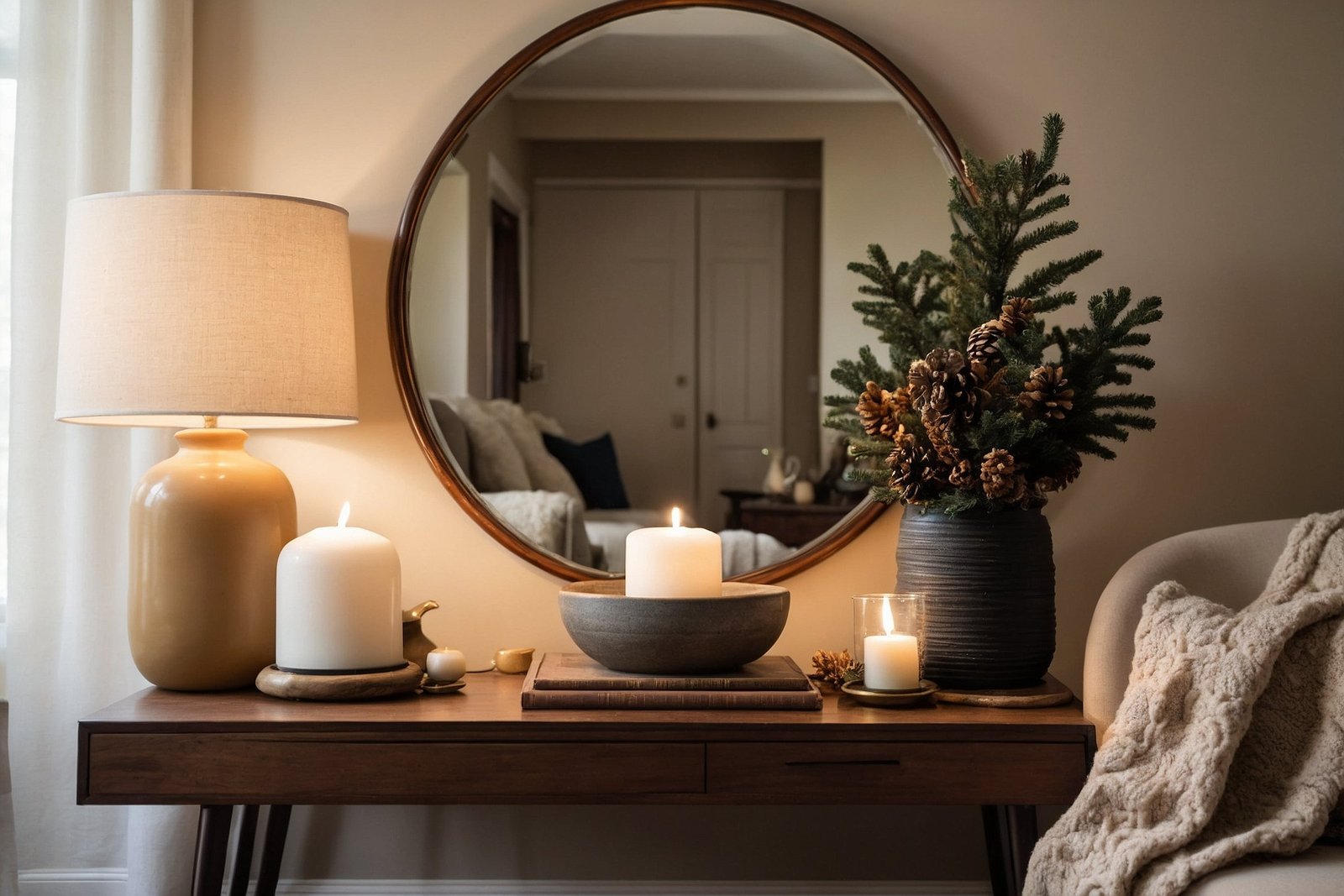
This is the single most impactful rule in console table styling. You need something tall, something medium, and something low. Without height variation, everything blurs into a flat, forgettable line. A lamp is almost always the tallest element in a console vignette, and the Brightech Sparq Arc how to clean every type of floor Lamp — when placed to one side of the table — creates an overhead curve that visually frames the entire arrangement and draws the eye upward.
3. Anchor With a Mirror
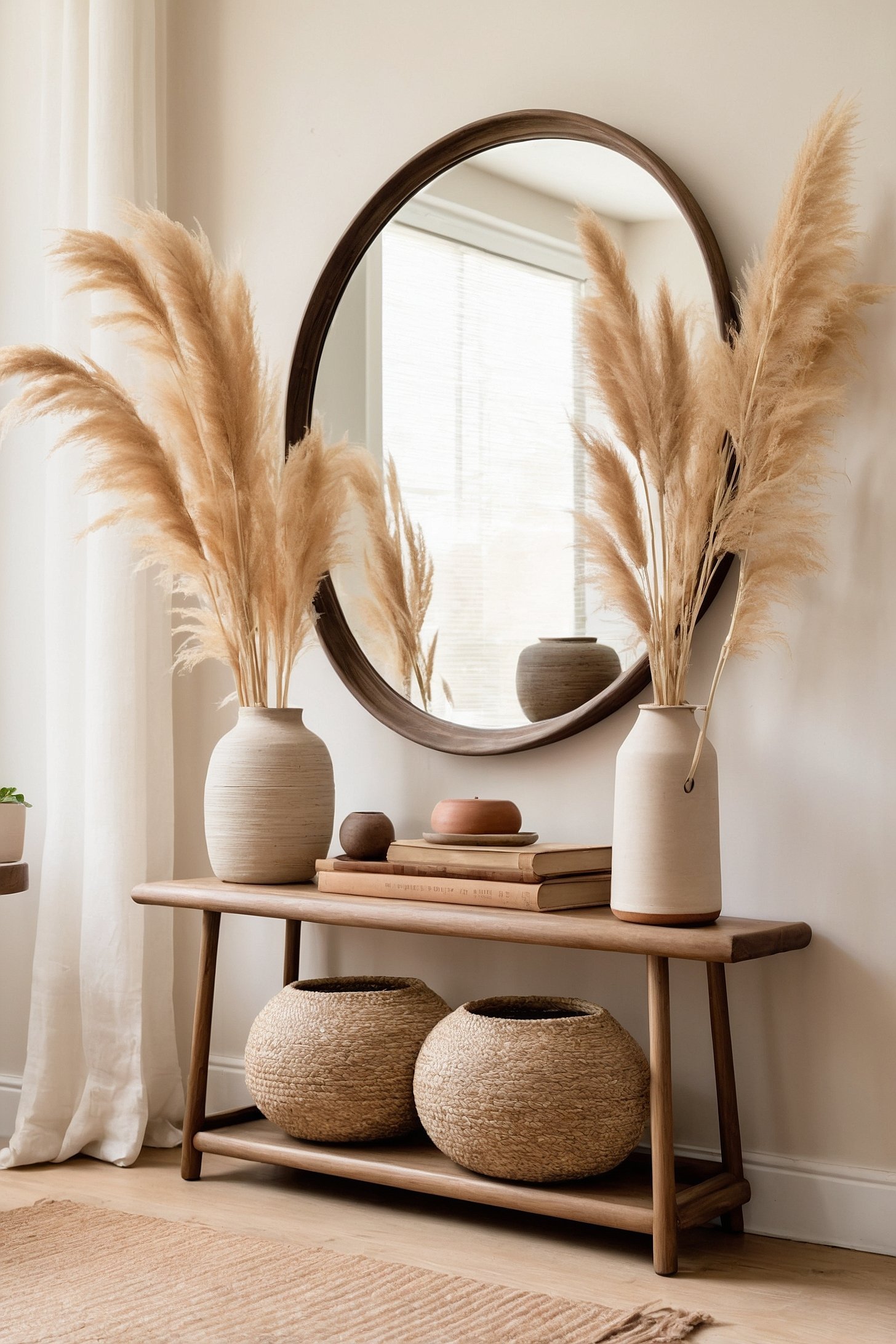
A mirror above a console table does two things simultaneously: it doubles the visual depth of the vignette and bounces light back into the room. For maximum impact, the mirror should be roughly two-thirds the width of the table below it. The Umbra Hub Round Wall Mirror with Rubber Frame works especially well because its soft circular shape contrasts beautifully with the hard horizontal line of the table, and the rubber frame is available in multiple finishes to match your existing hardware.
4. Use a Tray to Create a Contained Zone
A tray on a console table does something counterintuitive: it makes the surface look more organized while giving you a dedicated space to cluster smaller objects without them looking scattered. The Mud Pie Paulownia Wood Rectangle Tray is a designer favorite for good reason — its natural wood grain adds warmth and texture, and the raised edges keep its contents visually grouped. Inside the tray, try a small candle, a couple of smooth stones, and a folded linen napkin.
5. Bring in at Least One Organic Shape
Straight lines dominate furniture, so you need organic shapes to soften the composition. This is where a vase earns its keep. The Harrods Amphora Terracotta Vase — or any asymmetrical ceramic vase with an irregular rim — introduces the kind of imperfect, handmade quality that makes a styled surface feel curated rather than staged. Fill it with dried pampas grass or simple eucalyptus stems to add a second organic texture without the maintenance of fresh flowers.
The Layering Method
6. Start From the Back
Always begin styling from the back of the surface and work forward. Your tallest pieces — the mirror, the lamp, any tall vase — go at the back. Medium-height pieces layer in front of those. Small, flat, or horizontal items come closest to the front edge. This front-to-back layering is what gives a console table its sense of depth.
7. Lean Instead of Hang
Not everything needs to be mounted on the wall. Leaning a framed print, a small piece of art, or even a decorative plate against the wall adds instant personality and can be rearranged in seconds. This works especially well in rental spaces where you want to avoid putting holes in walls.
8. Let One Thing Break the Line
Allow one element to hang slightly over the edge of the table or cascade downward — a trailing plant, a string of beads, a folded throw. This broken edge softens the whole arrangement and makes it look natural rather than arranged.
Working With Color and Texture
9. Follow the Three-Texture Rule
Every great console vignette has at least three distinct textures: something smooth (ceramic, glass, lacquer), something rough or matte (wood, linen, terracotta), and something reflective (metal, mirror, polished stone). Without texture contrast, even beautiful objects can look flat.
10. Pull Colors From Your Room
Your console table is not an island. Pull at least one color from the surrounding room and echo it in one of your vignette objects. If your sofa has mustard cushions, add a mustard-toned candle or a book with a yellow spine. This repetition is what makes a room feel designed rather than decorated.
11. Add One Dark Element
Even in a bright, airy room, every console vignette benefits from one dark anchor — a black candle holder, a deep navy book stack, a dark-stained wood box. This darkness creates contrast and gives the eye somewhere to rest.
Entryway-Specific Tips
12. Make It Functional First
An entryway console table has to pull double duty. Beautiful, yes — but also practical. Leave space for a small bowl or tray to catch keys, or add a small basket on the lower shelf for bags and shoes. Function styled well is always more impressive than style with no function at all.
13. Scale Your Lamp to the Table
A lamp shade that is too wide will visually overwhelm the table and block whatever is behind it. As a general rule, the shade diameter should be no wider than two-thirds the depth of the table surface.
Seasonal Console Table Swaps
14. Swap Just Three Items Per Season
You do not need to completely redesign your console table every three months. Swap just three things: the vase contents (dried botanicals for spring, pine cones for winter), one textile (a light linen runner in summer, a chunky knit in fall), and one decorative object that fits the seasonal mood. The bones of the arrangement stay; only the details shift.
15. Use Books to Adjust Height On the Fly
Stack two or three hardcover books (spines turned inward or outward depending on how editorial you want to go) under a vase or small sculpture to raise it up. This is one of the cheapest and most effective designer tricks there is. Books also add color, texture, and personality all at once.
Putting It All Together
Great console table styling is less about following a rigid formula and more about understanding a few core principles: odd numbers, height variation, texture contrast, and the relationship between the table and the wall behind it. Start with a table that fits your space, anchor it with a mirror, layer in your heights, and give yourself permission to move things around until it feels right. The best-styled tables always look effortless — which, paradoxically, is the result of quite a bit of intentional effort. For more ideas, explore our home decor ideas.