Why Every Flower Lover Needs a Cutting Garden
There’s a special kind of joy in walking into your backyard, scissors in hand, and cutting a bouquet of flowers you grew yourself. No trips to the florist, no wilting supermarket bunches that last three days, no guilt about the price tag. Just fresh, beautiful flowers from your own garden, whenever you want them, all summer long.
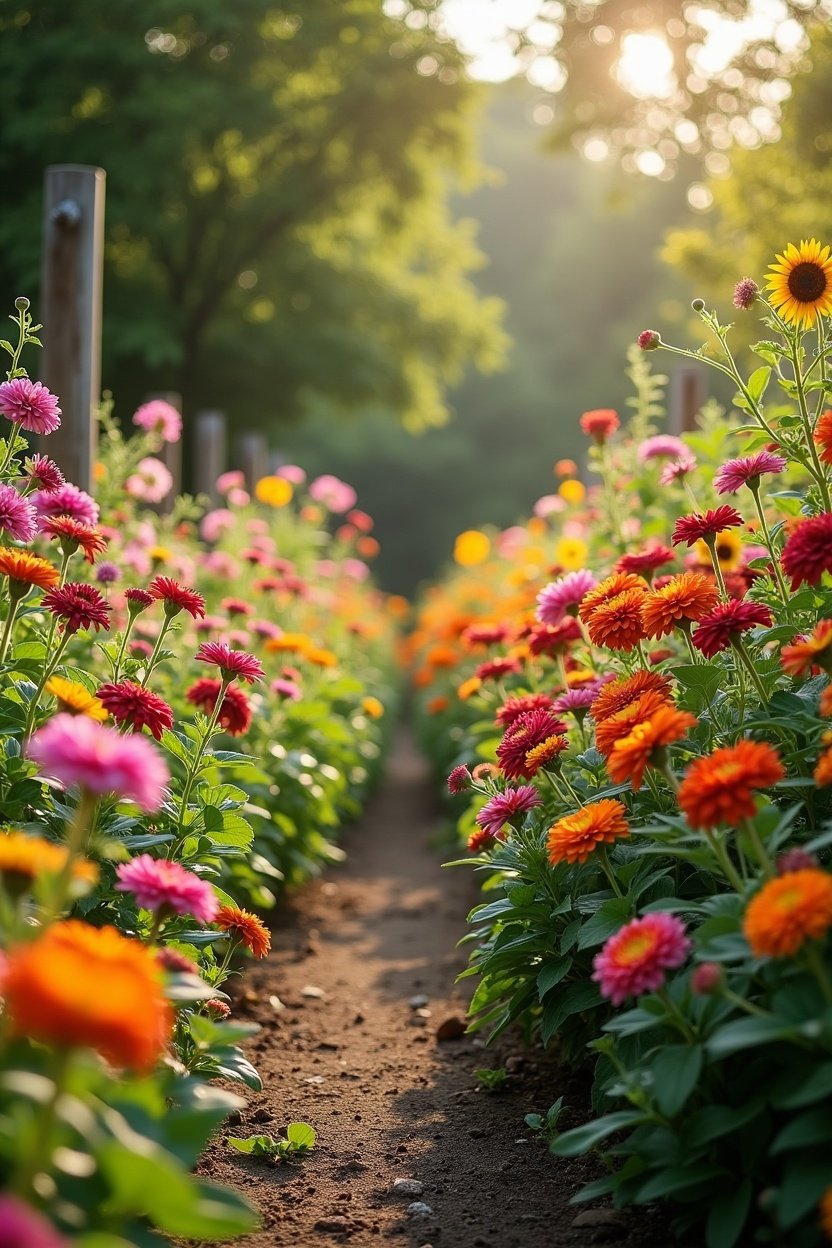
A cutting garden is different from a decorative flower bed. Decorative gardens are designed to look beautiful from the outside — you admire them from a distance. A cutting garden is designed to be harvested. The flowers are planted in rows for easy picking, chosen specifically for long vase life, and grown in quantities that let you cut freely without leaving the garden looking bare.
The best part? Cutting gardens are surprisingly easy to start, even if you’ve never grown flowers before. Most cutting flowers are annuals — they grow from seed to bloom in a single season, which means you don’t need to wait years for results. Here’s everything you need to know to plant your first cutting garden this spring.
Choose the Right Location: Sun, Water, and Access
Cutting flowers need full sun — at least 6 to 8 hours of direct sunlight per day. Most of the best cutting flowers are sun lovers, and even partial shade will reduce bloom production significantly. Pick the sunniest spot in your yard, even if it’s not the most visible location. Unlike an ornamental border, a cutting garden doesn’t need to be on display — it’s a working garden, like a vegetable patch.
Good drainage is essential. Flowers don’t want to sit in soggy soil. If your chosen spot holds water after rain, consider building a raised bed to improve drainage. A spot near a water source (hose bib or rain barrel) is ideal since you’ll be watering regularly during hot summer stretches.
Size-wise, start small. A 4-by-8-foot bed gives you enough room for 6 to 8 varieties and produces more flowers than you might expect. You can always expand next year once you know which flowers perform best in your specific conditions.
The Best Flowers for a Beginner Cutting Garden
Not all flowers are good for cutting. The best cutting flowers share three qualities: long stems, a long vase life (at least 5 to 7 days), and prolific blooms — meaning the more you cut, the more they produce. Here are the stars of any cutting garden:
Zinnias are the undisputed champion of the cutting garden. They grow from seed in about 60 days, bloom continuously all summer, come in every color except blue, and last 7 to 10 days in a vase. They actually produce more flowers the more you cut them. A Mixed Zinnia Seed Variety Pack gives you a rainbow of colors and sizes from a single planting.
Cosmos are another must-grow. Their delicate, daisy-like flowers on long, airy stems add a wildflower quality to any arrangement. They’re ridiculously easy to grow from seed, tolerate poor soil, and bloom from midsummer until frost. They’re also one of the best flowers for attracting pollinators to your garden.
Sunflowers add drama and height to both the garden and the vase. Choose branching varieties (rather than single-stem types) for continuous cutting. Look for pollen-free varieties like ‘ProCut’ or ‘Sunrich’ — they last longer in the vase and won’t drop yellow pollen all over your table.
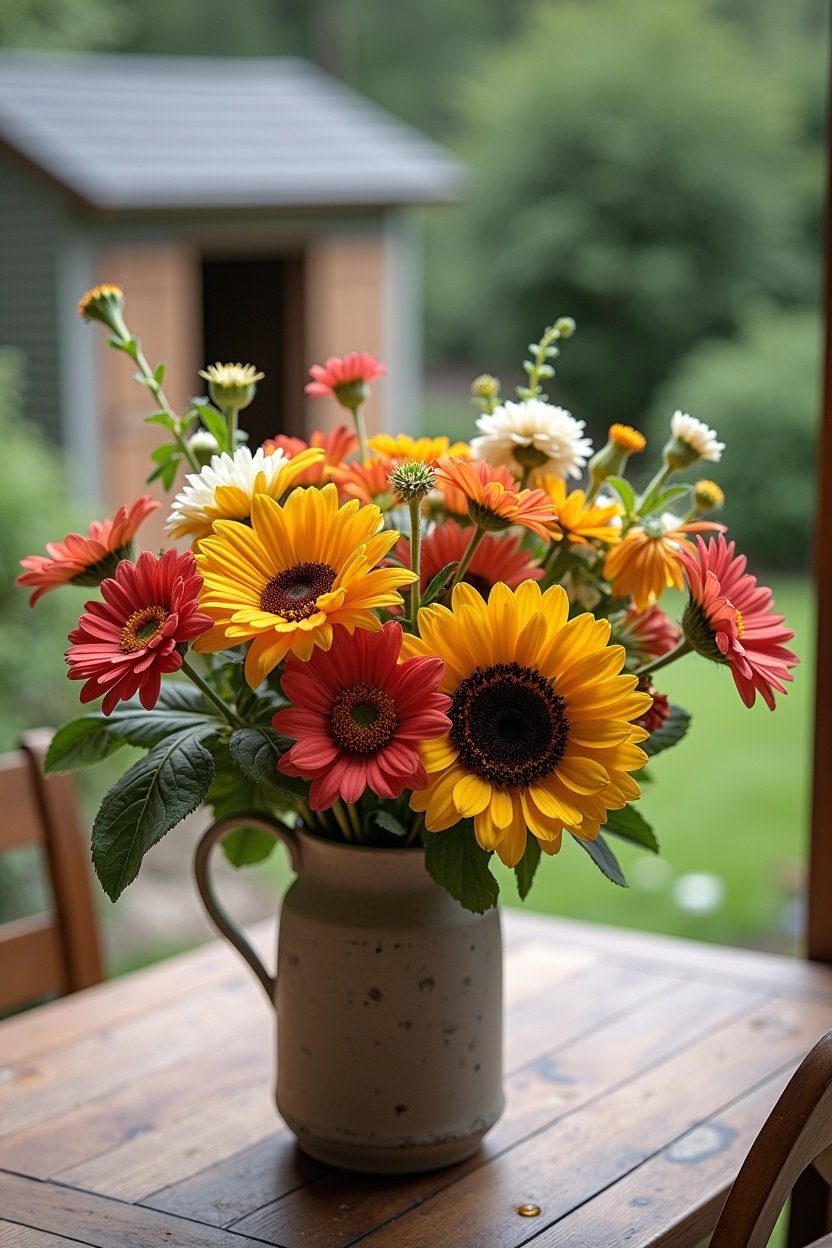
Dahlias are the showstoppers. Their intricate, layered blooms come in an astonishing range of sizes, shapes, and colors. They take a bit more effort — you plant tubers in spring and need to stake the taller varieties — but the payoff is extraordinary. A single dahlia plant can produce dozens of blooms from midsummer through the first frost. Dahlia Tuber Collection (Mixed Dinner Plate Varieties) gives you the large, jaw-dropping blooms that make arrangements look professional.
Snapdragons are a spring-to-early-summer workhorse. Their tall spikes of ruffled flowers add vertical interest to arrangements and come in gorgeous shades of pink, coral, yellow, and white. Start them from seed indoors 8 to 10 weeks before your last frost date, or buy transplants for faster results.
Sweet peas are a spring-season treasure. Their fragrance alone is worth growing them. They prefer cool weather and will stop blooming in summer heat, but for those glorious weeks in late spring and early summer, nothing else compares. Train them on a simple trellis or netting for easy picking.
Plan for Continuous Bloom: Succession Planting
The secret to having flowers all season long is succession planting — sowing the same varieties multiple times at 2 to 3 week intervals. If you plant all your zinnias at once, you’ll get a massive flush of flowers for a few weeks and then production will taper off. But if you plant a row of zinnias every two weeks from late spring through early summer, you’ll have fresh waves of blooms arriving continuously from July through October.
For most annual cutting flowers, three to four successive plantings are enough. Mark your calendar with sowing dates so you don’t forget — it’s easy to get busy and skip a succession, which leaves a gap in your harvest later.
Combine succession planting with variety selection for the longest possible season:
- Spring: Sweet peas, snapdragons, larkspur, ranunculus
- Early summer: Zinnias (first sowing), cosmos, bachelor buttons, nigella
- Midsummer: Sunflowers, zinnias (second and third sowings), dahlias begin
- Late summer to fall: Dahlias peak, celosia, strawflower, marigolds, late zinnias
How to Plant: Row Planting for Easy Harvesting
Unlike ornamental beds where you plant in drifts and groupings for visual effect, cutting gardens work best planted in straight rows — just like a vegetable garden. Rows make it easy to weed, water, and harvest without stepping on plants. Space rows 12 to 18 inches apart depending on the variety, and use garden twine stretched between stakes to keep your rows straight.
Prepare your soil before planting by working in 2 to 3 inches of compost. Most cutting flowers aren’t heavy feeders, but they do appreciate rich, well-drained soil. A Organic Flower Garden Compost and Fertilizer blended for blooming plants gives your flowers a strong nutritional foundation without overfeeding, which can actually reduce blooms and encourage leggy growth.
For seeds, follow packet instructions for depth and spacing. Most annual flower seeds are planted shallowly — just barely covered with soil. Water gently after planting and keep the soil consistently moist until seedlings are established. Mulch between rows with straw or shredded leaves to retain moisture and suppress weeds.
How to Harvest Flowers for the Longest Vase Life
How and when you cut your flowers makes an enormous difference in how long they last indoors. Follow these rules for the best results:
Cut in the morning. Early morning is the best time to harvest flowers. The stems are fully hydrated from the cool overnight hours, and the flowers haven’t been stressed by daytime heat. If you can’t cut in the morning, late evening is the second-best option. Avoid cutting in the heat of the afternoon.
Cut at the right stage. Most flowers should be cut when they’re about halfway to three-quarters open. Buds that are too tight may never open fully indoors, while fully open blooms will fade quickly. Zinnias are an exception — cut them when they’re fully open and the stem is firm. If the stem bends when you wiggle it, the zinnia isn’t ready.
Use clean, sharp shears. A Bypass Garden Pruning Shears with sharp blades makes clean cuts that heal quickly on the plant and allow maximum water uptake through the stem. Avoid scissors, which can crush the stem and reduce vase life.
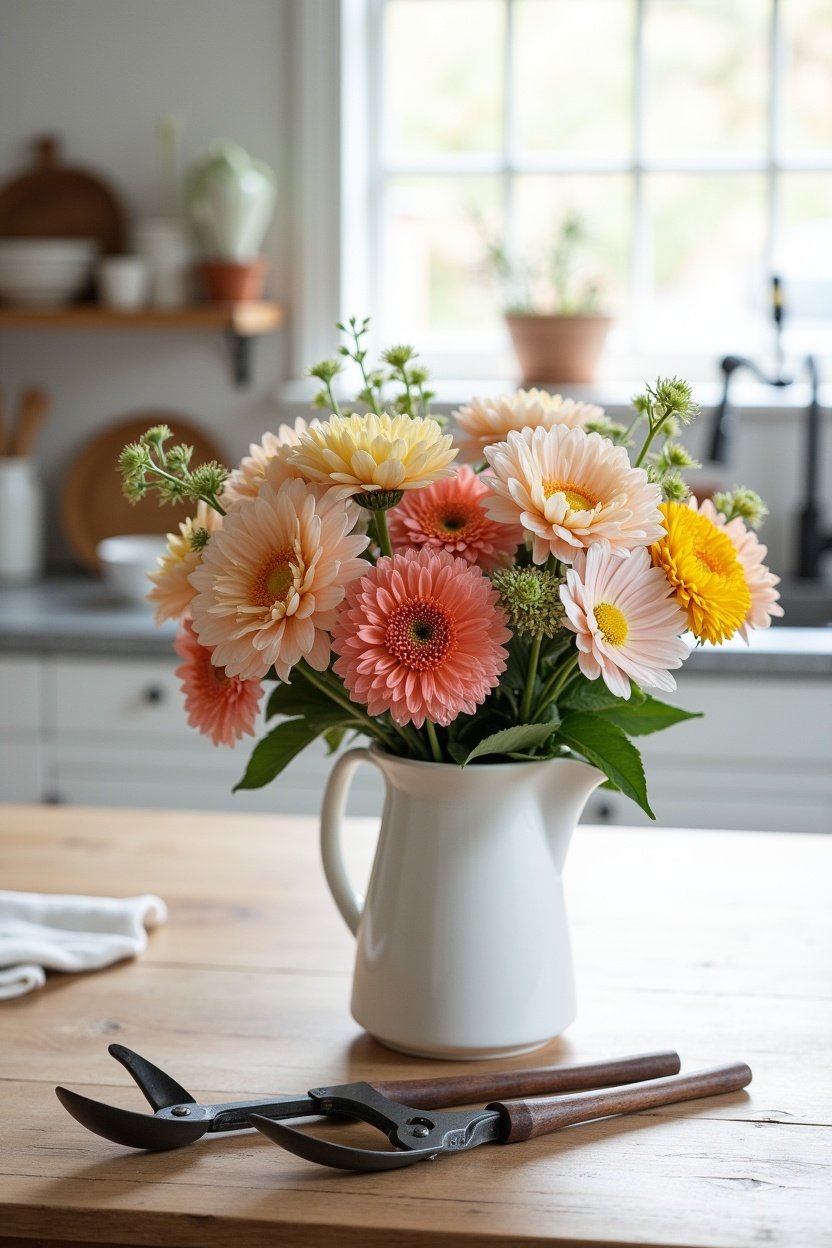
Plunge stems into water immediately. Carry a bucket of cool water with you into the garden. As you cut each stem, plunge it directly into the water. Air bubbles form in cut stems within seconds, blocking water uptake — getting them into water immediately prevents this. Let the flowers rest in a cool, dark spot for a few hours before arranging. This process, called conditioning, lets the stems drink deeply and extends vase life significantly.
Strip lower leaves. Remove any leaves that would sit below the water line in your vase. Submerged foliage rots quickly, clouds the water, and creates bacteria that shorten the life of your flowers.
Simple Maintenance for Maximum Blooms
A cutting garden rewards you proportionally to how much you cut. Most annual flowers are programmed to produce seeds — when you cut the flowers before they can set seed, the plant responds by producing even more flowers. This is why the best cutting gardens actually look better and more productive the more you harvest.
Beyond regular cutting, keep up with these basics:
- Water deeply and consistently. Most cutting flowers need about 1 inch of water per week. During hot stretches, you may need to water every other day. Water at the base of the plants, not overhead, to prevent fungal diseases.
- Feed lightly every 3 to 4 weeks. A balanced liquid fertilizer applied at half strength keeps plants productive without pushing excessive leaf growth at the expense of flowers.
- Stake tall varieties. Dahlias, sunflowers, and tall snapdragons benefit from simple support. Install stakes or a horizontal netting grid when plants are young — it’s much easier than trying to rescue flopping plants later.
- Watch for pests. Aphids, Japanese beetles, and slugs are the most common cutting garden pests. A strong blast of water knocks off aphids, hand-picking handles beetles, and a ring of crushed eggshells or diatomaceous earth deters slugs.
Your First-Year Cutting Garden Shopping List
Keep your first year simple. Here’s everything you need to start a productive cutting garden:
- Seeds: Zinnias (mixed colors), cosmos, sunflowers (branching variety), snapdragons, bachelor buttons
- Tubers: 3 to 5 dahlia tubers in mixed varieties
- Supplies: Compost, stakes or netting, bypass pruners, a harvest bucket, flower food packets
- Space: A sunny 4-by-8-foot bed or equivalent row space
Total investment: roughly the cost of three florist bouquets. Total return: hundreds of stems from June through October. That math speaks for itself. Start your cutting garden this spring and you’ll spend the entire summer doing something that never gets old — walking into your backyard and cutting flowers that are more beautiful, more fragrant, and more meaningful than anything you could buy. Because you grew them yourself.