
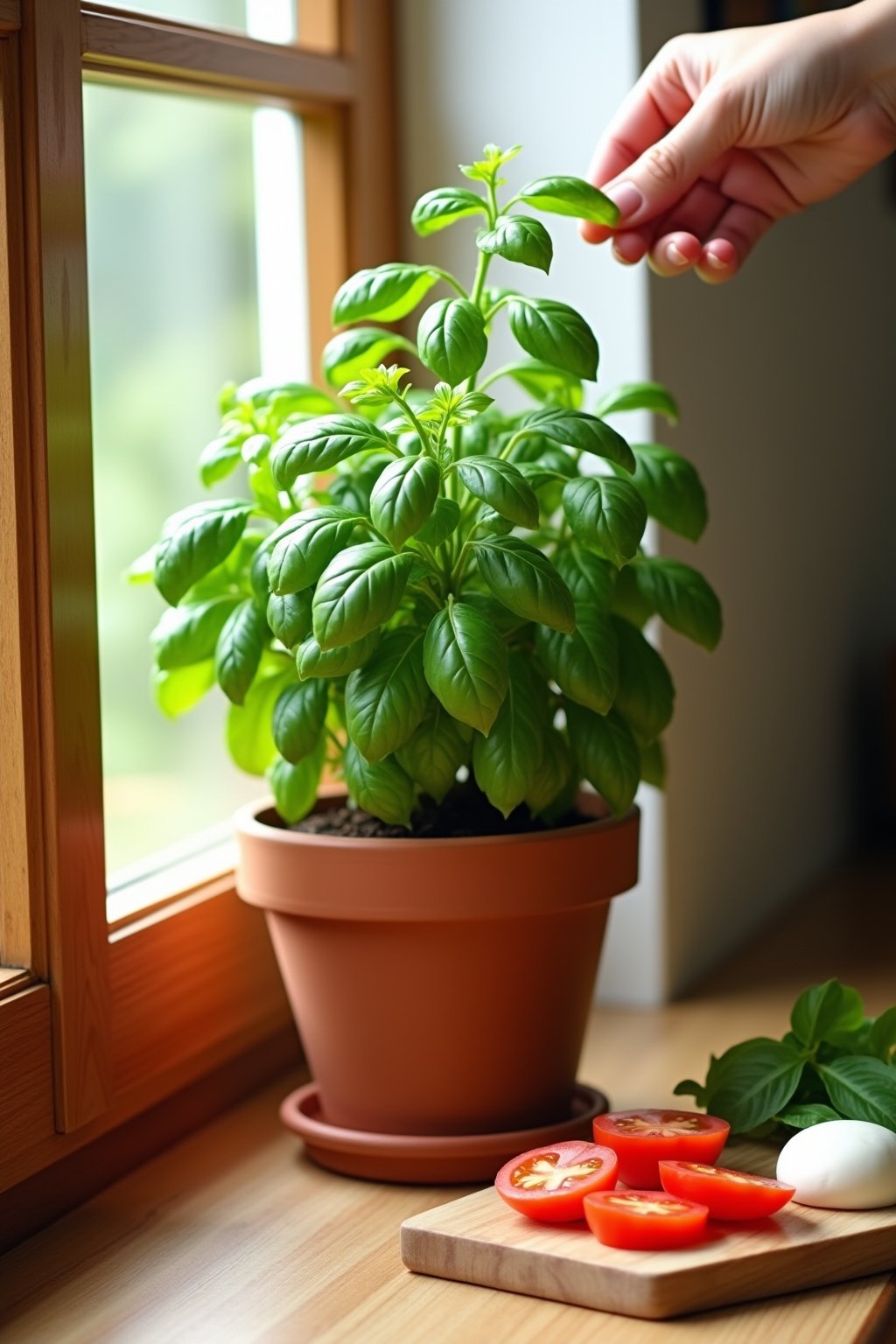
Basil is the herb that every cook needs and every gardener should grow. A single basil plant can produce enough fresh leaves for weekly pasta, salads, and homemade pesto all summer long — and it is one of the simplest herbs to grow whether you have a full garden, a sunny windowsill, or just a pot on your balcony.
The secret to lush, productive basil is understanding that this plant wants warmth, consistent moisture, and regular harvesting. Most people treat basil too gently — they pick a leaf here and there and wonder why the plant gets leggy and flowers early. The truth is that basil wants to be cut hard and often. Every time you harvest, the plant responds by growing two new branches where you cut, getting bushier and more productive with every trim.
Quick Facts
| Sun | Full Sun (6-8 hours) |
| Difficulty | Beginner |
| Season | Spring through Fall (year-round indoors) |
| Zone | All zones (annual outdoors, houseplant in winter) |
| Time to Harvest | 3-4 weeks from transplant for first harvest |
What You Need for How to Grow Basil Like a Pro (Indoors and Outdoors)
- Basil seeds or transplants (Genovese for cooking, Thai for stir-fry, Lemon for tea)
- Container with drainage (minimum 6 inches deep)
- High-quality potting mix
- Balanced liquid fertilizer
- Pruning shears or scissors
- Warm sunny location or grow light for indoors
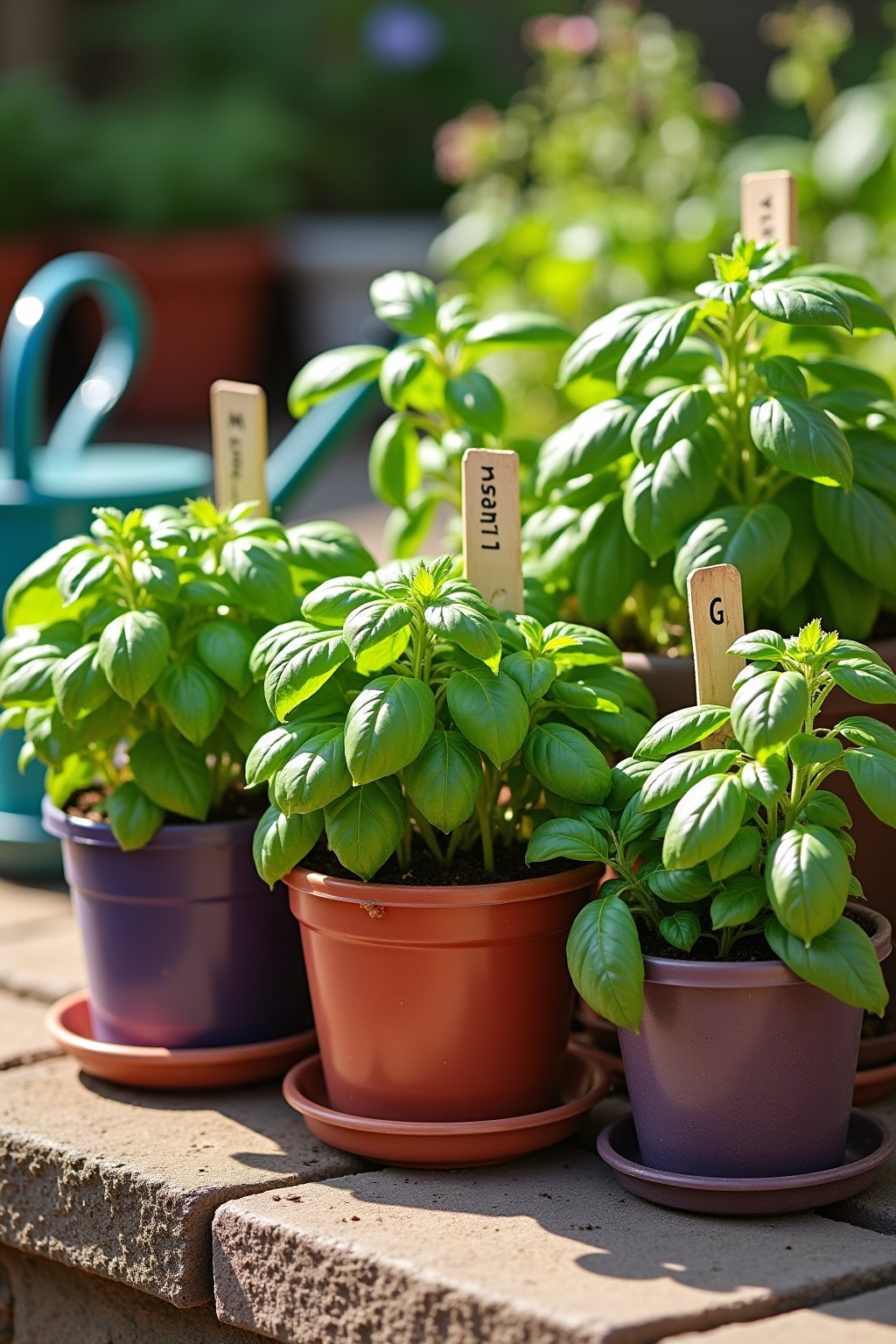
Genovese basil is the classic Italian cooking variety — large, sweet, aromatic leaves perfect for pesto and caprese. Thai basil has a licorice-anise flavor ideal for Asian cooking. Lemon basil adds citrus notes to fish, tea, and desserts. Grow all three for maximum kitchen versatility.
Basil is extremely cold-sensitive — it dies at the first hint of frost and sulks below 50°F. Don’t plant outdoors until nighttime temperatures are consistently above 55°F. Indoors, keep it away from drafty windows in winter.
Step 1: Start From Seed or Buy Transplants
Basil is easy to grow from seed — sow indoors 4-6 weeks before your last frost date, or direct sow outdoors after all danger of frost has passed. Seeds germinate in 5-10 days in warm soil (70-75°F). Alternatively, buy transplants from a nursery for an instant head start.
The grocery store basil plants work too — repot them immediately into a larger container with fresh potting mix because they’re usually severely rootbound with multiple plants crammed in one tiny pot. Separate the stems gently and plant each in its own pot for best results.
Step 2: Give It Maximum Warmth and Sun
Basil craves full sun and warmth. Outdoors, place it in the sunniest spot possible — 6-8 hours of direct sunlight produces the most aromatic, flavorful leaves. Indoors, a south-facing window is essential, or supplement with a grow light for 12-14 hours daily.
Basil grows fastest at temperatures between 70-85°F. Below 50°F, growth stalls and leaves may darken. If you’re growing in containers, the advantage is mobility — move pots to follow the sun and bring them indoors when nights get cool in fall.
Step 3: Water Consistently (Not Too Much, Not Too Little)
Basil likes consistently moist but never waterlogged soil. Water when the top inch of soil feels dry. In hot summer weather, container basil may need daily watering. In-ground basil needs about 1 inch of water per week.
Water at the base of the plant, not from overhead — wet leaves invite fungal diseases. Mulch around outdoor basil with straw or grass clippings to retain moisture and keep roots cool. Wilting in afternoon heat is normal and not a sign of underwatering if the soil is moist — basil recovers quickly in the evening.
Step 4: Harvest the Right Way (This Is the Secret)
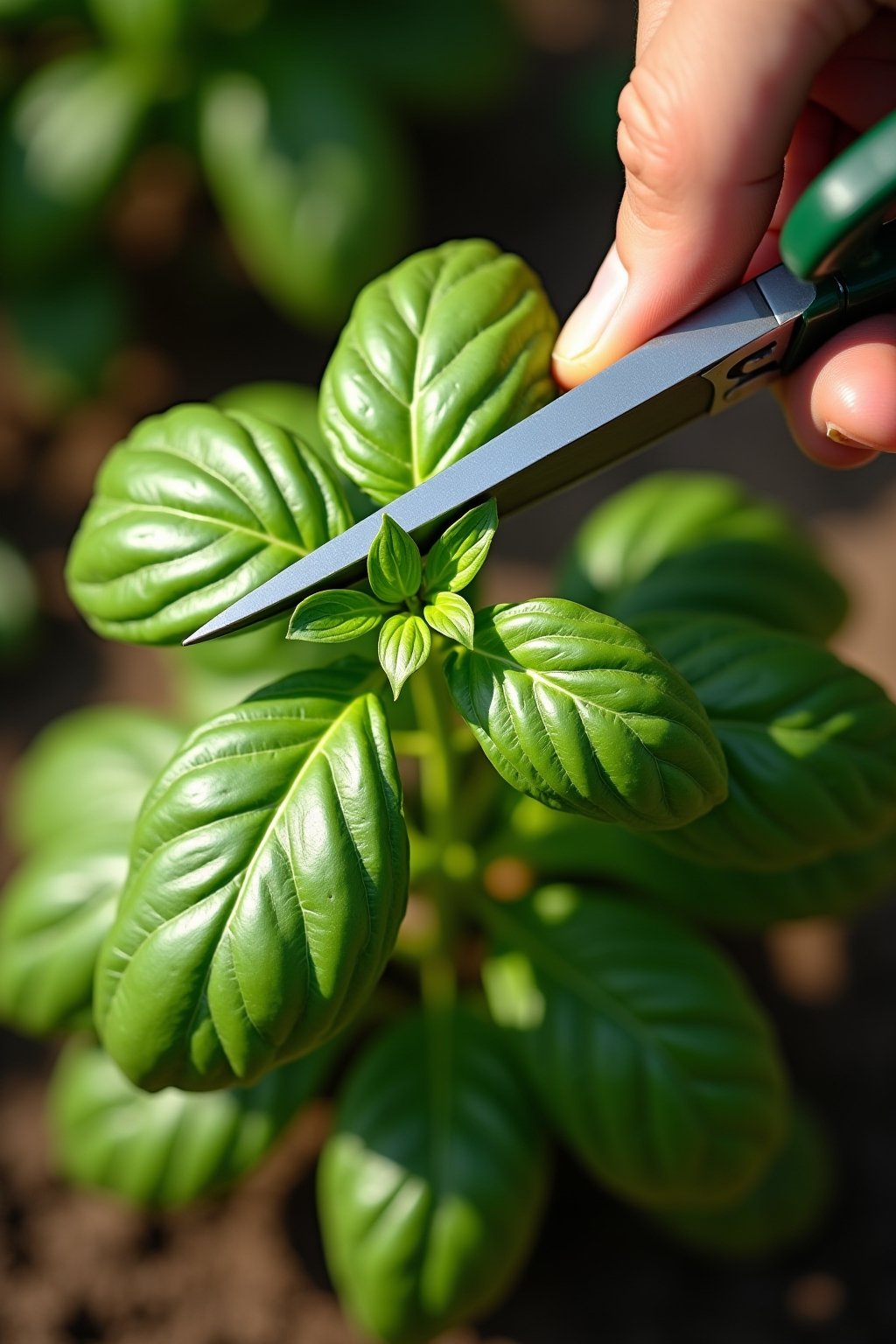
This is where most people go wrong. Don’t pick individual leaves from the bottom — this creates a tall, sparse plant. Instead, cut entire stem tips back to just above a pair of leaves. Each cut point will grow TWO new branches, doubling the plant’s bushiness.
Start harvesting when the plant has 3-4 sets of leaves, and harvest every 1-2 weeks throughout the season. Always cut above a leaf node (where leaves meet the stem). The more you cut, the more it grows. This constant harvesting also prevents flowering, which changes the flavor and signals the plant to stop producing new leaves.
Step 5: Pinch Off Flowers Immediately
When basil flowers, it puts all its energy into seed production and the leaves become bitter. Pinch off flower buds the moment you see them — they appear as small pointed clusters at the tips of the stems. Check every few days because basil can go from bud to full flower quickly in warm weather.
If your basil does flower, cut the entire stem back by half. New growth will emerge with full flavor. At the end of the season, let one plant flower and set seed if you want to save seeds for next year.
Step 6: Grow Basil Indoors Year-Round
With a grow light, you can grow fresh basil all winter. Use a 6-inch pot with drainage, full-spectrum LED light for 12-14 hours daily, and keep the room above 65°F. Indoor basil grows more slowly than outdoor but still provides a steady supply of fresh leaves.
Replace indoor basil plants every 3-4 months as they naturally decline. Start new seeds while the current plant is still producing so you always have a fresh plant ready. A windowsill herb garden with basil, rosemary, and mint gives you fresh herbs year-round with minimal effort.
Common Problems and How to Fix Them
Leaves turning yellow: Overwatering is the most common cause. Let the soil dry out slightly between waterings. Also check for root rot — if roots are brown and mushy, the plant may not recover.
Plant going to flower too quickly: Usually caused by heat stress (above 90°F) or not harvesting enough. Cut the plant back by one-third and keep harvesting regularly. Afternoon shade helps in extreme heat.
Tiny holes in leaves: Japanese beetles or slugs. Handpick beetles in the morning when they’re sluggish. For slugs, use diatomaceous earth around the base of the plant or copper tape around containers.
Black spots on leaves: Downy mildew or cold damage. Remove affected leaves, improve air circulation, water at the base (not overhead), and keep plants warm. Some basil varieties like ‘Rutgers Devotion’ and ‘Amazel’ are bred for downy mildew resistance.
Seasonal Guide
Spring: Start seeds indoors 4-6 weeks before last frost. Don’t transplant outdoors until nighttime temperatures are consistently above 55°F. Protect transplants from wind for the first week.
Summer: Peak growing season. Harvest every 1-2 weeks by cutting stem tips. Pinch flowers immediately. Water daily in containers. Feed every 2 weeks with liquid fertilizer.
Fall: Harvest heavily before first frost — basil dies at the first touch of cold. Make a big batch of pesto to freeze for winter. Bring container basil indoors under lights to extend the season.
Winter: Grow indoors under lights with 12-14 hours daily. Expect slower growth but a steady supply of fresh leaves. Start new seeds in late January for spring transplanting.
Expert Tips
- Harvest from the top, not the bottom — cut stem tips above a leaf node. Each cut creates two new branches, making the plant bushier and more productive.
- Pinch flowers the second you see them — flowering changes the leaf flavor from sweet to bitter and signals the plant to stop producing new leaves.
- Grocery store basil is a great shortcut — separate the crammed-together stems and repot individually. You’ll get 3-5 plants for the price of one.
- Basil and tomatoes grow great together — plant basil at the base of tomato plants. They’re perfect companion plants that may even improve each other’s flavor.
- Freeze pesto in ice cube trays — at the end of summer, make a huge batch of pesto and freeze in ice cube trays. Pop out a cube whenever you need fresh basil flavor in winter.
- Never refrigerate fresh basil leaves — cold turns basil leaves black. Store cut basil stems in a glass of water at room temperature, like a bouquet of flowers.
Related Articles
Looking for more gardening guides? Check out these favorites:
Frequently Asked Questions
Can I grow basil indoors in winter?
Yes, with a grow light providing 12-14 hours of light daily and temperatures above 65°F. Indoor basil grows more slowly but still provides fresh leaves. A south-facing window can work in mild climates but most homes need supplemental light in winter.
Why does my basil keep dying?
The most common causes are overwatering (roots rot in soggy soil), cold temperatures (basil dies below 50°F), and not enough light (needs 6+ hours of direct sun). Make sure your pot has drainage holes and only water when the top inch of soil is dry.
How do I make basil bushy instead of tall?
Harvest regularly by cutting stem tips above leaf nodes — each cut creates two new branches. Start harvesting when the plant has 3-4 leaf sets. Pinch off flowers to keep energy focused on leaf growth. A basil plant harvested this way becomes a dense, productive bush.
What are the best basil varieties to grow?
Genovese is the classic for Italian cooking and pesto. Thai basil has an anise flavor for Asian dishes. Lemon basil adds citrus notes to fish and tea. Purple basil is beautiful in salads. For disease resistance, try Rutgers Devotion or Amazel. Growing 2-3 varieties gives you maximum kitchen versatility.
Can I grow basil from a cutting?
Yes! Cut a 4-inch stem from a healthy plant just below a leaf node. Remove the bottom leaves and place in a glass of water. Roots appear in 7-10 days. Once roots are 2 inches long, plant in soil. This is a great way to clone your best-performing plant.
How long does a basil plant last?
Basil is an annual — it completes its life cycle in one growing season. Outdoors, it dies at first frost. Indoors, plants can last 4-6 months before declining. For year-round basil, start new seeds every 3-4 months so a fresh plant is always ready.