
The Never-Ending Battle (And How to Finally Win It)
If you live with a dog, cat, or any furry pet, you know the struggle. Pet hair gets everywhere — on the sofa, embedded in carpet fibers, floating in the air, stuck to your black pants, woven into your car seats, and somehow even in rooms the pet has never entered. During shedding season, it can feel like your pet is producing more hair than seems biologically possible.
The truth is, you’ll never completely eliminate pet hair if you have a furry pet. But you can dramatically reduce it with the right tools and a smart routine. This guide covers proven methods for removing pet hair from every surface in your home — and keeping it under control between cleanings.
Upholstered Furniture: The Biggest Challenge
Upholstery is where pet hair clings most stubbornly. The texture of fabric — especially woven materials like linen, microfiber, and velvet — creates thousands of tiny hooks that grab and hold individual hairs. A standard lint roller barely scratches the surface.
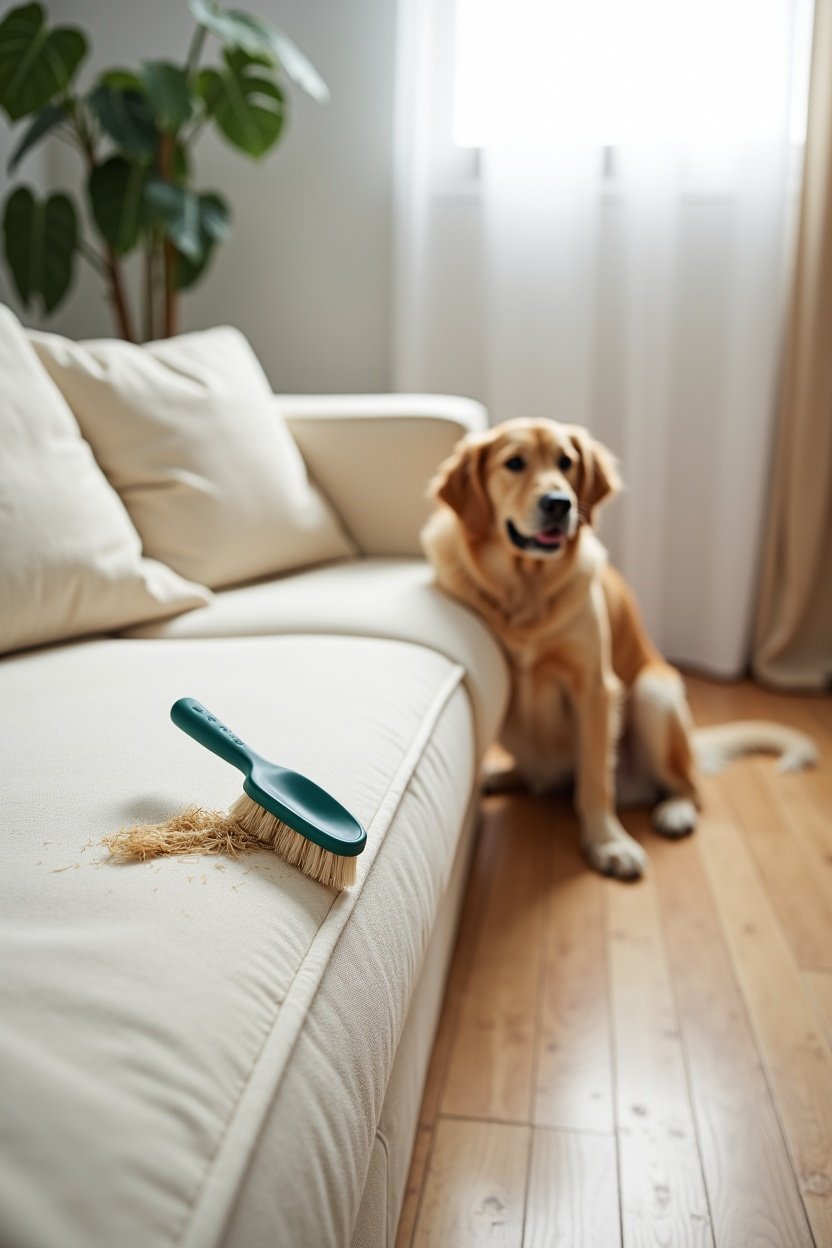
The most effective tool for upholstered furniture is a Rubber Pet Hair Remover Brush. These brushes use natural rubber bristles that create static electricity as you drag them across the fabric. The static charge lifts embedded pet hair out of the upholstery fibers and rolls it into clumps that are easy to pick up. It works significantly better than lint rollers and never needs refills.
For the technique: work in short, firm strokes in one direction, overlapping each stroke slightly. You’ll see the hair start to ball up and roll ahead of the brush. Once you’ve covered a section, pick up the hair clumps by hand or vacuum them off. Follow with a lint roller for any remaining surface hair.
Damp rubber gloves are another surprisingly effective tool. Put on a pair of rubber cleaning gloves, slightly dampen them, and run your hands over the upholstery. The damp rubber grabs pet hair and rolls it into removable clumps. This method is perfect for quick touch-ups between deeper cleanings.
Carpet and Rugs: Getting Deep Into the Fibers
Pet hair in carpet is particularly frustrating because regular vacuuming often leaves a significant amount behind. The hairs work their way down into the carpet pad, and suction alone can’t always pull them back up.
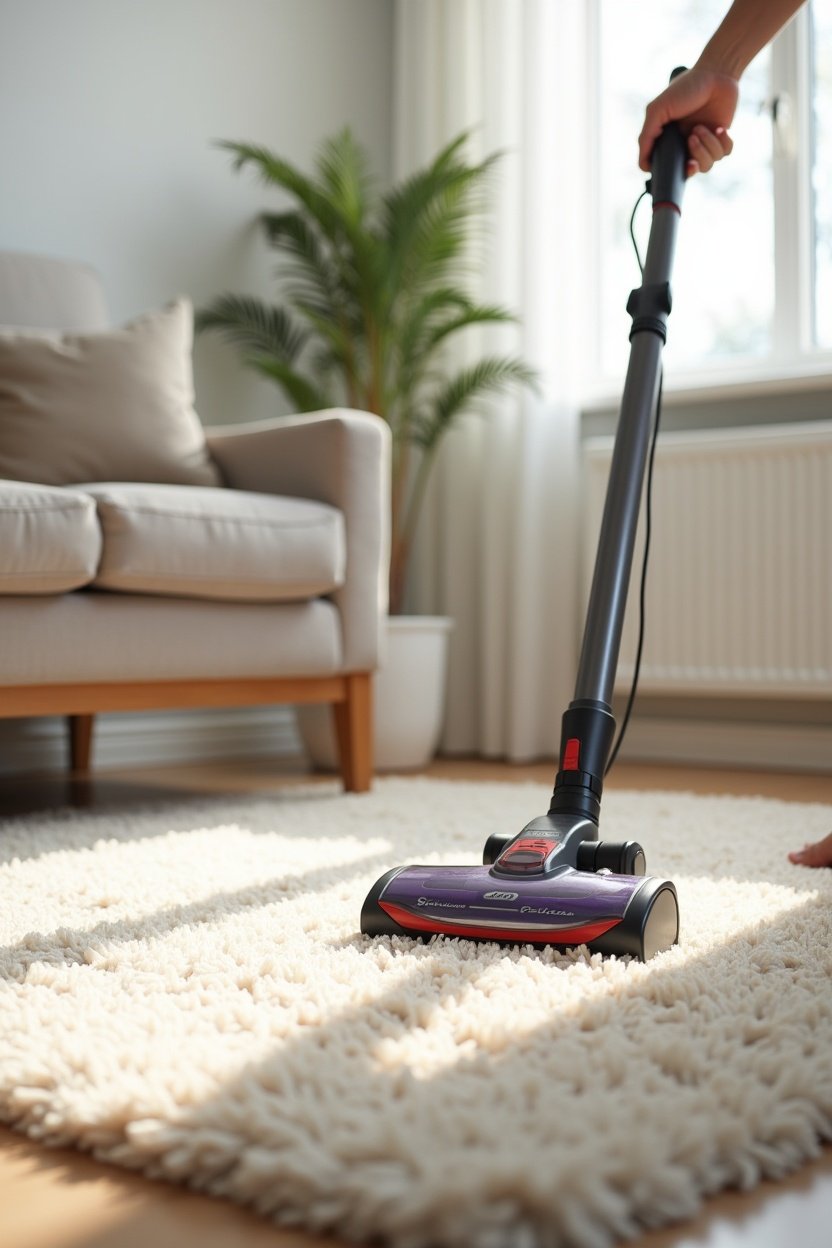
The key is a vacuum with a motorized brush roll — the spinning bristles agitate the carpet fibers and loosen embedded hair so the suction can pull it up. A Pet-Specific Upright Vacuum with HEPA Filter is purpose-built for this problem. The HEPA filter is important because it traps the fine dander particles (the real allergy trigger) instead of recirculating them into your room.
For high-traffic pet areas, vacuum at least twice per week — once with the vacuum running perpendicular to the carpet grain, then again running parallel. This cross-pattern approach catches hair that’s lying in different directions.
A rubber squeegee (yes, the kind for windows) is a secret weapon for area rugs and low-pile carpet. Drag the squeegee across the rug surface with firm pressure, and you’ll be genuinely shocked by how much hair it pulls up that the vacuum missed. The rubber edge gets under the hair and pops it free from the fibers.
For area rugs that can be moved, take them outside periodically and give them a good shake or beat them with a broom handle. Old-fashioned, but remarkably effective for dislodging deep-set hair and dander.
Hardwood, Tile, and Laminate Floors
Hard floors are generally easier to keep hair-free, but they present their own challenge: pet hair on hard surfaces tends to clump in corners and along baseboards, and it’s highly visible, especially on dark floors. Standard brooms can actually make the problem worse by scattering hair rather than collecting it.
A dry microfiber mop is the best first pass for hard floors. The microfiber attracts and holds pet hair through static charge rather than pushing it around. Run the dry mop across the entire floor, paying extra attention to corners, under furniture, and along baseboards where hair accumulates.
Follow with a vacuum on the hard floor setting (brush roll off) for a thorough clean. Robot vacuums are particularly good at maintaining hard floors between manual cleanings — running one daily keeps pet hair from ever building up enough to become visible.
Clothing and Fabric Accessories
Pet hair on clothing is one of the most persistent annoyances for pet owners. You can lint-roll your black pants five times before leaving the house and still arrive at work covered in cat hair. Here’s how to get ahead of it:
In the dryer: Before washing pet-hair-covered clothes, throw them in the dryer on a no-heat or low-heat tumble cycle for 10 minutes. The tumbling action loosens pet hair, and the lint trap catches it. Then wash as normal and dry. This pre-dryer step removes dramatically more hair than washing alone.
In the wash: Add half a cup of white vinegar to the rinse cycle. The vinegar helps relax the fabric fibers, releasing trapped pet hair so the water can carry it away. You can also toss in a couple of Reusable Dryer Balls for Pet Hair — the textured surface grabs hair during both washing and drying cycles.
On the go: Keep a travel lint roller in your car, at your desk, and in your bag. For a zero-waste alternative, a small strip of packing tape wrapped around your hand (sticky side out) works in a pinch.
Bedding and Pet Blankets
If your pet sleeps on the bed — or even near it — your bedding collects an enormous amount of hair. Wash bedding weekly in warm or hot water, and add the vinegar rinse described above. Before putting bedding in the washer, shake each piece vigorously outside to dislodge loose hair (otherwise it clogs your washing machine‘s drain filter).
Use a designated pet blanket on top of your bedding. Train your pet to sleep on the blanket rather than directly on your sheets or comforter. A washable, pet-specific blanket is easier to clean frequently and saves your bedding from the worst of it. Wash the pet blanket separately from your regular laundry to avoid cross-contamination.
Prevention: Reducing Shedding at the Source
The most effective pet hair management strategy isn’t about cleaning — it’s about reducing how much hair your pet sheds in the first place. Regular grooming makes a dramatic difference:
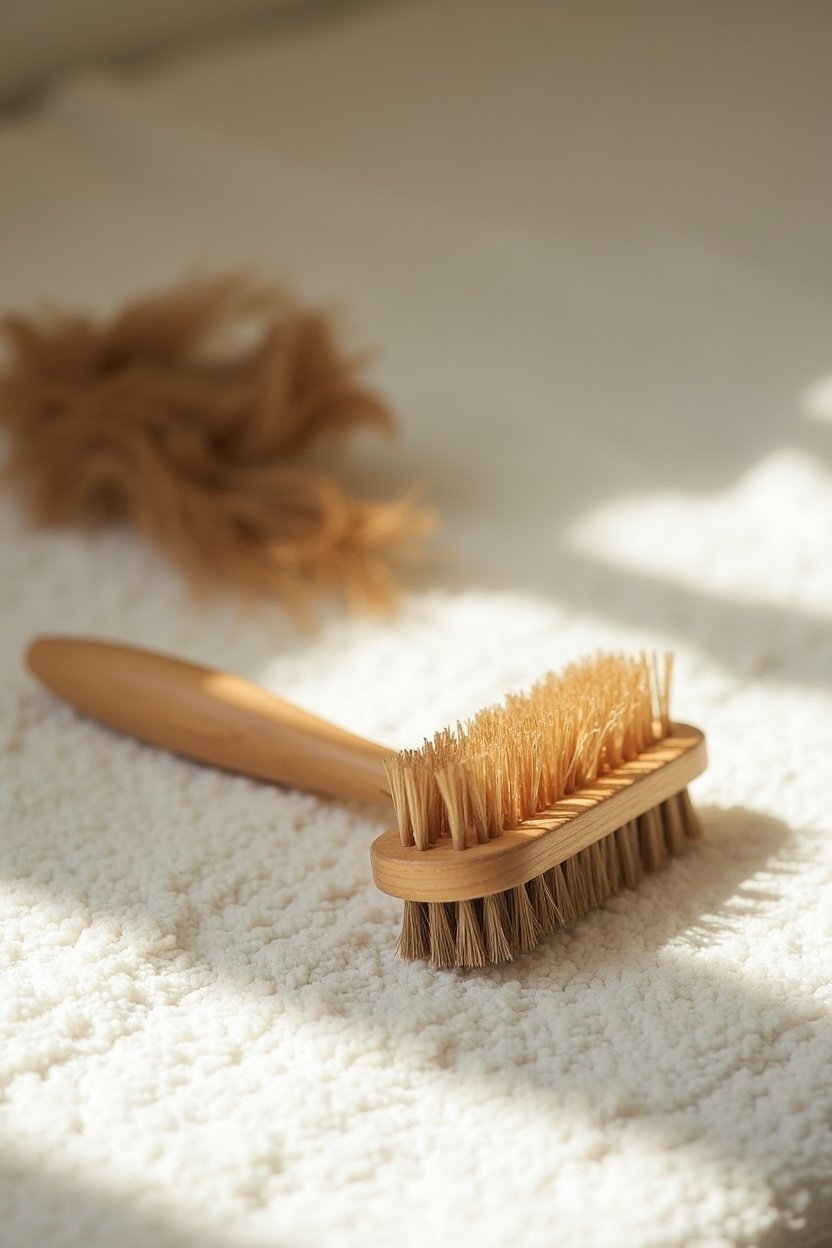
- Brush your pet daily during shedding season (spring and fall for most breeds). A 5-minute daily brushing session removes loose hair before it falls onto your furniture and floors. A Deshedding Tool for Dogs and Cats reaches through the topcoat to remove the loose undercoat that causes most shedding.
- Bathe regularly. Monthly baths with a gentle pet shampoo help remove loose hair and keep the coat healthy. Healthy coats shed less than dry, neglected ones.
- Feed quality food. A diet rich in omega-3 and omega-6 fatty acids promotes a healthy, glossy coat that sheds less. Consult your vet about supplements if your pet sheds excessively.
- Stay hydrated. Dehydration leads to dry skin and increased shedding. Make sure your pet always has access to fresh water.
A Realistic Weekly Pet Hair Routine
You don’t need to spend hours battling pet hair. This weekly routine, once it becomes habit, keeps your home looking clean and your allergies in check:
- Daily (5 minutes): Run a robot vacuum or do a quick pass with a microfiber mop on hard floors. Brush your pet.
- Every 2-3 days: Vacuum upholstered furniture and high-traffic carpet areas.
- Weekly: Full vacuum of all floors, wash pet blankets, wash your bedding with vinegar rinse.
- Monthly: Deep clean upholstery with rubber brush, wash slipcovers if applicable, clean HVAC filters.
Living with pet hair is the trade-off we make for the unconditional love, companionship, and entertainment our furry friends provide. With the right tools and a consistent routine, you can keep your home clean without losing your mind — or your favorite black sweater.