
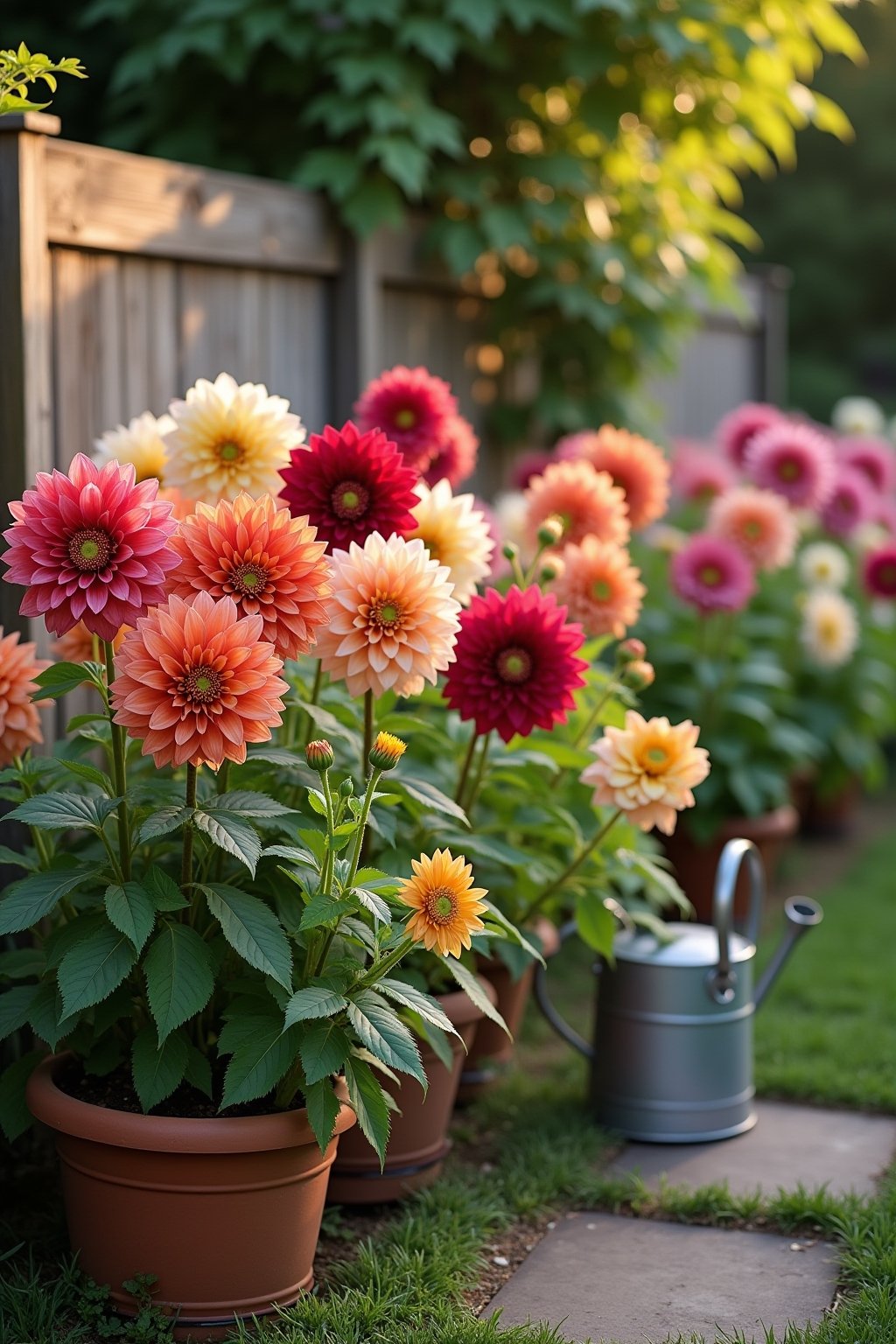
If you have ever stopped in your tracks to admire a dahlia at a farmers market or in someone’s front yard, you know exactly why these flowers have such a devoted following. Those dinner-plate-sized blooms in every color imaginable — peach, burgundy, coral, bright pink, deep purple — are absolutely showstopping. And here is the secret that experienced gardeners do not always share: dahlias are surprisingly easy to grow.
I planted my first dahlia tubers five years ago with zero expectations and was rewarded with an explosion of blooms from midsummer all the way to the first frost. Whether you want to fill your cutting garden, brighten up a border, or grow flowers that make your neighbors ask what your secret is, this guide will walk you through everything from choosing tubers to getting those jaw-dropping blooms.
Quick Facts
| Sun | Full Sun (6-8 hours minimum) |
| Difficulty | Beginner |
| Season | Plant in Spring, blooms Summer through Fall |
| Zone | USDA Zones 3-10 (lift tubers in Zones 3-7) |
| Time to Harvest | 8-12 weeks from planting to first blooms |
What You Need for Growing Dahlias for Beginners: How to Plant Tubers This Spring for Stunning Summer Blooms
- Dahlia tubers (choose firm, healthy tubers with visible eyes)
- Well-draining potting mix or garden soil amended with compost
- Garden stakes or dahlia support cages (4-5 feet tall)
- Garden twine or soft plant ties
- Balanced organic fertilizer (low nitrogen, higher phosphorus)
- Mulch (straw or shredded bark)
- Watering can or drip irrigation
- Garden fork for fall lifting
- Labels or markers for varieties
- Sharp pruners or snips
The quality of your dahlia tubers matters more than anything else. Look for tubers that are firm, plump, and have at least one visible eye (a small bumpy growth point near the stem end where the tuber connects to the crown). Avoid tubers that are shriveled, moldy, or squishy. You can order tubers online from specialty growers in late winter for the best selection, or pick them up at garden centers in spring.
For fertilizer, choose one with lower nitrogen and higher phosphorus (like a 5-10-10 or similar ratio). Too much nitrogen produces massive green plants with very few flowers. Phosphorus encourages strong root development and abundant blooms. Stakes or cages are non-negotiable for dinner plate and taller varieties — a mature dahlia loaded with blooms can easily snap in a summer storm.
Step 1: Choose the Right Dahlia Varieties for Your Garden
Dahlias come in an astonishing range of sizes, shapes, and colors. For beginners, I recommend starting with 3 to 5 tubers in different bloom types: try a dinner plate variety (8-12 inch blooms) like ‘Cafe au Lait’ or ‘Kelvin Floodlight,’ a ball dahlia like ‘Wizard of Oz,’ and a decorative type like ‘Arabian Night’ for that stunning deep burgundy color.
Consider the height of each variety. Tall dahlias (4-5 feet) need staking and work best at the back of borders. Compact or dwarf varieties (12-24 inches) are perfect for containers and front-of-bed planting. Mixing heights and bloom sizes creates a much more dynamic and visually interesting garden display.
Step 2: Time Your Planting After the Last Frost
Dahlias are tropical plants that cannot tolerate frost. Wait to plant tubers outdoors until all danger of frost has passed and the soil temperature has reached at least 60°F. In most areas, this means mid-April to late May. If you are eager to get a head start, you can start tubers indoors in pots 4 to 6 weeks before your last frost date, then transplant them outside when conditions are right.
Check your soil temperature with a thermometer pushed 4 inches deep. Planting tubers in cold, wet soil is the number one cause of tuber rot in spring. It is always better to plant a week late than a week early with dahlias.
Step 3: Prepare the Planting Site
Choose a spot with full sun — at least 6 to 8 hours of direct sunlight daily. Dahlias can tolerate morning shade in very hot climates, but they bloom best with maximum sun exposure. The soil must drain well; dahlias will rot in soggy ground. If your soil is heavy clay, work in plenty of compost and consider planting in raised beds for better drainage.
Dig the planting area to a depth of about 12 inches and mix in 2 to 3 inches of compost. If you want to add fertilizer at planting time, mix a handful of balanced organic fertilizer into the bottom of each planting hole and cover it with an inch of plain soil so the tuber does not sit directly on fertilizer.
Step 4: Plant Tubers at the Correct Depth and Spacing
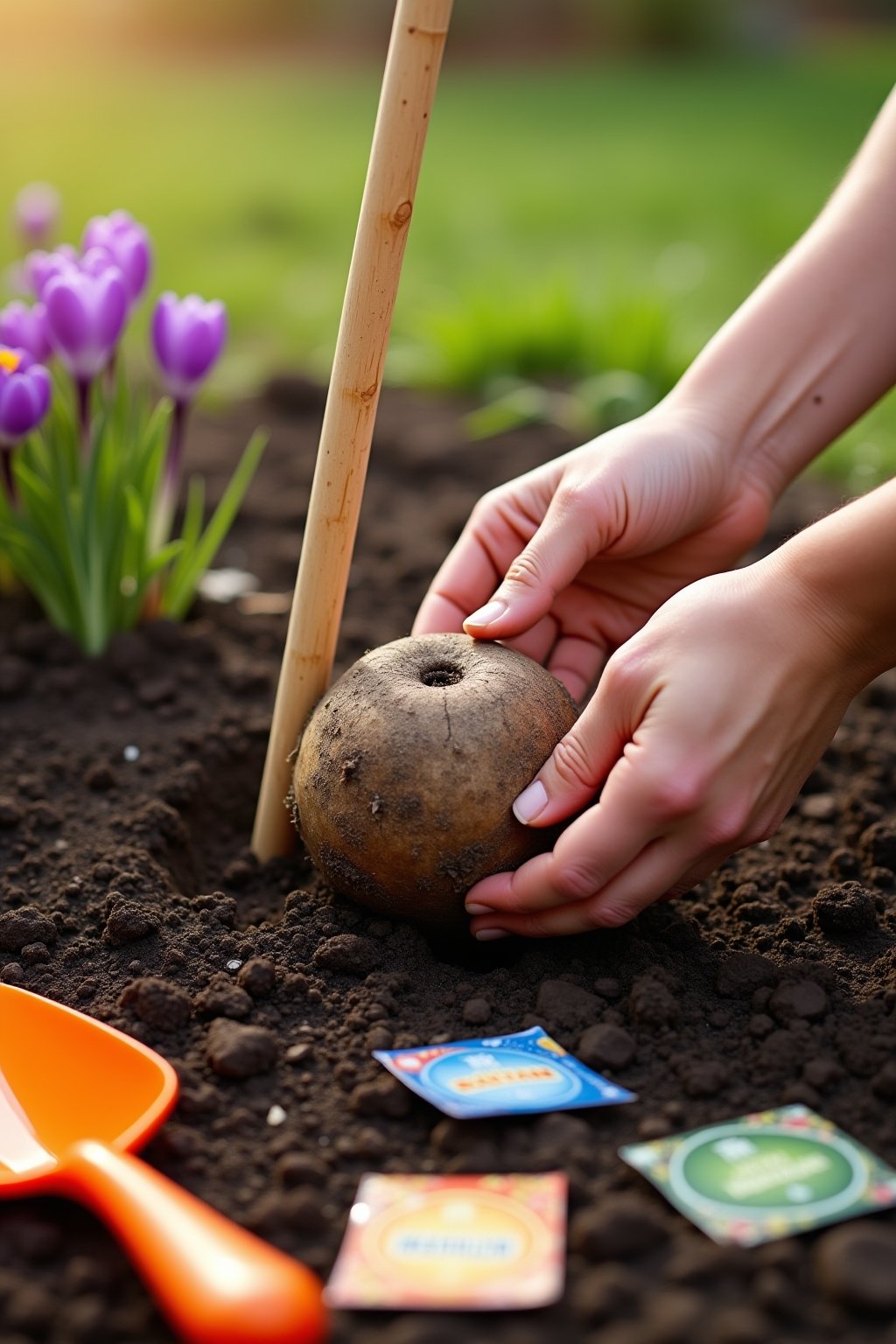
Dig a hole 6 to 8 inches deep for each tuber. Lay the tuber horizontally with the eye (growth point) facing up. If your tuber is long, angle it slightly so the eye end is at the top. Cover with only 2 to 3 inches of soil initially — you will fill in the rest as the shoot grows. This prevents the tuber from sitting in excess moisture before roots develop.
Space tubers 18 to 24 inches apart for standard varieties and 12 to 15 inches for dwarf types. Install your stake or support cage now at planting time, not later — pushing a stake into the ground later risks damaging the tuber and root system. Place the stake about 2 inches from the tuber on the side where the eye is pointing.
Step 5: Water Sparingly Until Shoots Appear
This is where many beginners go wrong. Do not water tubers at planting time unless the soil is bone dry. Dahlia tubers contain enough stored moisture to sprout on their own, and wet soil around an unrooted tuber is a recipe for rot. Wait until you see green shoots emerge from the soil — usually 2 to 4 weeks after planting — before you start watering regularly.
Once shoots are up and growing, water deeply 2 to 3 times per week rather than light daily watering. Deep watering encourages roots to grow down into the soil where moisture is more consistent. As plants mature and fill out, they will need more water, especially during hot summer weather. Drip irrigation at the base of plants is ideal because it keeps foliage dry and prevents fungal disease.
Step 6: Pinch for Bushier Plants and More Blooms
When your dahlia plant has 3 to 4 sets of leaves (usually about 12 inches tall), pinch out the center growing tip just above a set of leaves. This feels terrifying the first time you do it — you are literally snipping off the top of a healthy plant. But pinching forces the plant to branch out from the sides, resulting in a bushier plant with significantly more flower stems.
You can also remove the small side buds that appear next to each main flower bud if you want fewer but larger individual blooms. This technique, called disbudding, directs all the plant’s energy into the central bud. It is especially effective for dinner plate varieties where you want maximum flower size.
Step 7: Fertilize Regularly Through the Growing Season
About a month after planting, begin feeding your dahlias every 3 to 4 weeks with a low-nitrogen, high-phosphorus fertilizer. A ratio like 5-10-10 or 10-20-20 promotes flowering over leafy growth. You can use granular organic fertilizer scratched into the soil surface or a liquid feed diluted in water.
Stop fertilizing in late August or early September. Late feeding encourages soft new growth that will not harden off before frost, and it can interfere with the tuber’s ability to store energy for next year. Let the plant focus its final weeks on producing blooms and fattening up those underground tubers.
Step 8: Harvest Blooms to Encourage More Flowers
Dahlias are cut-and-come-again flowers — the more you harvest, the more they produce. Cut stems early in the morning when flowers are fully open but the center is still tight. Use sharp, clean pruners and cut down to just above a set of leaves. Place stems immediately in cool water.
If you are not harvesting for arrangements, deadhead spent blooms regularly. Look for flower heads that are starting to droop or lose petals and snip them off. This prevents the plant from putting energy into seed production and redirects that energy into new buds. A well-maintained dahlia plant can produce blooms continuously from midsummer until the first killing frost.
Step 9: Lift and Store Tubers After Frost (Cold Climates)
In USDA Zones 3-7, you need to dig up dahlia tubers after the first frost kills the foliage. Wait about a week after frost blackens the leaves, then carefully dig around the plant with a garden fork, lifting the entire clump. Shake off excess soil and let the clump dry in a sheltered spot for a day or two.
Once dry, trim stems to 2 inches and store tubers in a cool, dark place (40-50°F) in barely damp peat moss, vermiculite, or wood shavings. Check monthly for rot or shriveling. In Zones 8-10, dahlias can often overwinter in the ground with a thick layer of mulch for insulation, though lifting and dividing every 2 to 3 years keeps them vigorous.
Common Problems and How to Fix Them
Tuber not sprouting after 4 weeks: Carefully dig down and check the tuber. If it is firm and has a visible eye, be patient — cool soil temperatures slow sprouting. If the tuber is soft, mushy, or has a foul smell, it has rotted and needs to be replaced. Ensure your soil drains well and avoid watering before shoots emerge.
Tall plants flopping over: Dahlias need staking. Tie stems loosely to stakes with soft twine in a figure-eight pattern as they grow. For large varieties, use a tomato cage or create a corral with 3 stakes and twine. Always install supports at planting time to avoid root damage later.
Leaves turning yellow: Lower leaf yellowing is normal as the plant matures and puts energy into blooms. However, widespread yellowing can indicate overwatering, poor drainage, or nutrient deficiency. Check soil moisture before watering and ensure drainage is adequate.
Powdery mildew on leaves: This white, dusty coating is common in late summer when days are warm and nights are cool. Improve air circulation by spacing plants properly and removing lower foliage. Avoid overhead watering. Spray affected leaves with a solution of 1 tablespoon baking soda per gallon of water.
Slugs and snails eating young shoots: These pests love tender dahlia shoots. Use iron phosphate slug bait around emerging plants, set up beer traps, or ring the base of plants with crushed eggshells or diatomaceous earth.
Seasonal Guide
Here is your dahlia growing timeline from tuber to bloom and back:
| Month | Task | Details |
|---|---|---|
| February-March | Order tubers | Best selection from specialty growers |
| March-April | Optional: start indoors in pots | 4-6 weeks before last frost |
| April-May | Plant outdoors after last frost | Soil must be 60°F+, install stakes |
| May-June | Pinch growing tips, begin regular watering | Pinch at 12 inches tall |
| June-July | Begin fertilizing, tie to stakes | Feed every 3-4 weeks |
| July-October | Peak blooming, harvest and deadhead | Cut often for more flowers |
| September | Stop fertilizing | Let tubers store energy |
| October-November | Lift tubers after first frost (Zones 3-7) | Dry and store at 40-50°F |
Expert Tips
- Plant the eye facing up, always — The eye is the small bumpy nub where new growth emerges, found near where the tuber connects to the old stem. If you cannot find an eye, the tuber may not be viable. Each tuber needs at least one eye to grow.
- Skip watering at planting to prevent rot — This goes against every gardening instinct, but dahlia tubers sitting in wet soil before they have roots will rot. Only begin watering once green shoots break the soil surface.
- Pinch once, harvest twice as many blooms — Removing the center growing tip at 12 inches tall doubles the number of flowering stems. Yes, it feels wrong. Do it anyway. Your future self arranging armloads of dahlias will thank you.
- Use tomato cages for effortless support — Instead of fiddling with single stakes and twine, drop a sturdy tomato cage over each dahlia at planting time. The plant grows up through it naturally and stays perfectly supported.
- Cut flowers in the morning for longest vase life — Harvest when the flower is fully open but the center petals are still tight. Plunge stems immediately into cool water. Dahlias can last 5 to 7 days in a vase with a daily water change.
- Label every variety at planting — When you lift tubers in fall, you will have no idea what color or type each clump is unless you labeled them. Use waterproof markers on sturdy plastic labels pushed into the ground next to each tuber.
Frequently Asked Questions
When is the best time to plant dahlia tubers?
Plant dahlia tubers outdoors after all danger of frost has passed and soil temperature reaches at least 60°F. In most regions, this is mid-April through late May. Planting too early in cold, wet soil causes tuber rot. You can start tubers indoors in pots 4 to 6 weeks before your last frost date to get a head start.
How deep do you plant dahlia tubers?
Dig a hole 6 to 8 inches deep, but only cover the tuber with 2 to 3 inches of soil initially. Lay the tuber horizontally with the eye (growth point) facing up. As the shoot grows taller, gradually fill in the remaining soil. This prevents excess moisture around the tuber before roots develop.
Do dahlias come back every year?
Dahlias are perennial in USDA Zones 8-10, where they can overwinter in the ground with mulch protection. In colder zones (3-7), you need to dig up the tubers after the first fall frost and store them in a cool, dark place over winter. Replant them the following spring for another season of blooms.
Why are my dahlia leaves turning yellow?
Some lower leaf yellowing is normal as the plant matures. However, widespread yellowing often indicates overwatering, poor drainage, or nutrient deficiency. Let the soil dry slightly between waterings, ensure good drainage, and feed with a balanced fertilizer. Yellowing with brown spots may indicate a fungal disease.
How many flowers does one dahlia tuber produce?
A single well-grown dahlia tuber can produce 20 to 50 or more flowers over the growing season, especially if you pinch the growing tip early and deadhead spent blooms regularly. Cutting flowers for arrangements actually encourages the plant to produce even more buds.
Can you grow dahlias in containers?
Yes, dahlias grow beautifully in containers. Choose dwarf or compact varieties and use a pot at least 12 to 14 inches in diameter with drainage holes. Use well-draining potting mix, water more frequently than in-ground plants, and fertilize every 2 to 3 weeks. Container dahlias may need staking as they grow.