
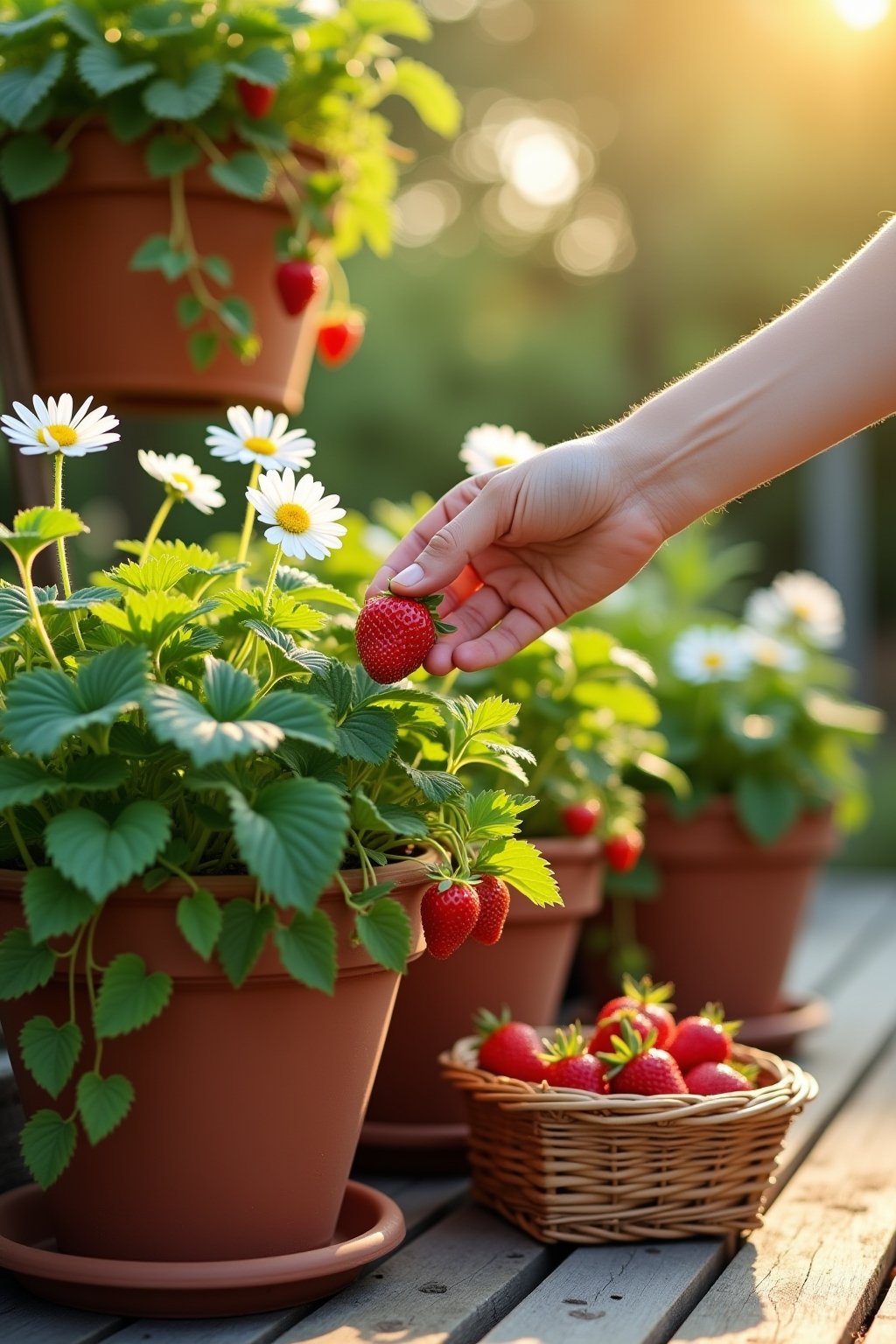
You do not need a big backyard to grow sweet, juicy strawberries. A few containers on a sunny patio, balcony, or porch are all it takes — and the strawberries you grow at home will taste dramatically better than anything from the grocery store. That is not an exaggeration. Store-bought strawberries are picked underripe and bred for shelf life, not flavor.
Container strawberries are one of the most rewarding things you can grow as a beginner. The plants are compact, surprisingly productive, and actually look beautiful with their white flowers and trailing runners spilling over the sides of a pot. Plus, growing in containers solves most of the problems that plague in-ground strawberry patches — no slugs crawling through wet mulch, no birds stealing every ripe berry, and no weeds choking out your plants.
Quick Facts
| Sun | Full Sun (6-8 hours minimum) |
| Difficulty | Beginner |
| Season | Plant in early spring (after last frost) |
| Zone | USDA Zones 3-10 (containers allow zone-pushing) |
| Time to Harvest | 4-6 weeks from flowering (everbearing types fruit all summer) |
What You Need for How to Grow Strawberries in Containers (Patio, Balcony, or Porch)
- Strawberry plants (everbearing varieties recommended: Albion, Seascape, or Quinault)
- Containers with drainage holes (minimum 8 inches deep, 12+ inches wide)
- High-quality potting mix (not garden soil)
- Slow-release fertilizer (10-10-10 or strawberry-specific)
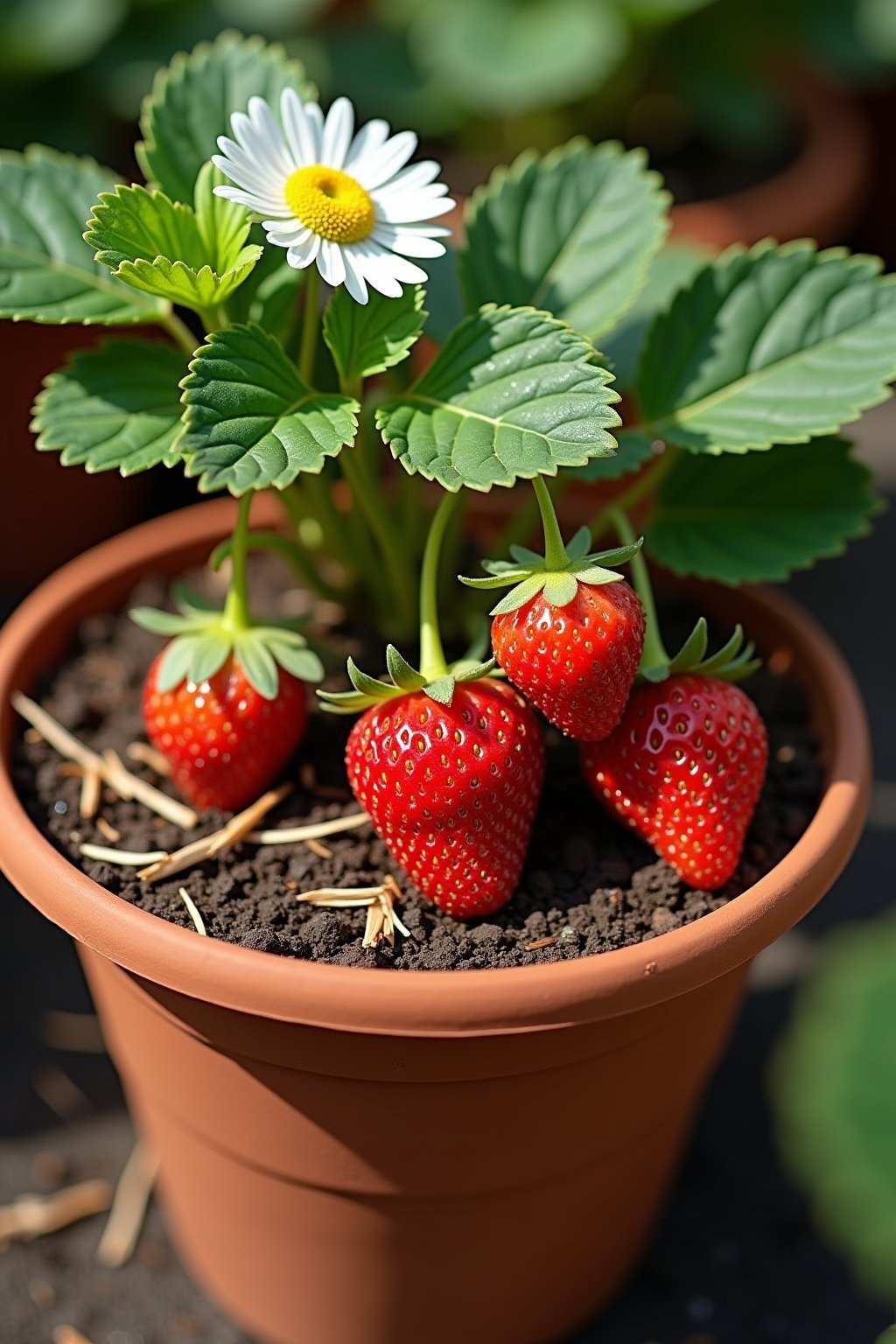
- Mulch (straw or pine needles)
- Watering can or drip system
- Strawberry pot or hanging basket (optional)
- Netting or bird cloth (if birds are a problem)
Everbearing vs June-bearing: For containers, always choose everbearing (also called day-neutral) varieties. They produce fruit continuously from late spring through fall instead of one big harvest in June. Albion and Seascape are the gold standards — sweet, productive, and disease-resistant.
Container size matters: Each strawberry plant needs about 8 inches of space. A 12-inch pot holds 3 plants comfortably, an 18-inch pot holds 5-6. Strawberry jars with side pockets are beautiful and space-efficient. Hanging baskets work wonderfully too — the berries dangle down where birds can’t reach them.
Use potting mix, not garden soil: Garden soil compacts in containers and drowns the roots. A quality potting mix with perlite drains properly and stays fluffy all season.
Step 1: Choose the Right Container and Variety
Pick a container at least 8 inches deep and 12 inches wide with drainage holes in the bottom. Strawberry roots are shallow but they need room to spread. Terracotta pots look beautiful but dry out faster — plastic or glazed ceramic retains moisture better. Fabric grow bags (10-15 gallon) are an excellent budget option that provide great drainage and airflow to roots.
For variety, go with everbearing types for containers. Albion produces large, very sweet berries. Seascape is incredibly productive. Quinault produces big berries and tolerates partial shade better than most. Buy plants from a nursery rather than growing from seed — seed-grown strawberries take over a year to produce fruit while transplants fruit the first summer.
Step 2: Prepare the Container and Soil
Fill your container with high-quality potting mix to about 1 inch below the rim. Mix in a slow-release fertilizer according to the package instructions — strawberries are moderate feeders and benefit from consistent nutrition throughout the season.
If using a terracotta pot, soak it in water for 30 minutes before planting. Dry terracotta wicks moisture away from the soil, which can stress new transplants. Add a layer of small rocks or broken pot shards over the drainage holes to prevent soil from washing out while still allowing water to flow.
Step 3: Plant at the Right Depth
This is the most critical step — planting depth determines success or failure with strawberries. The crown (the thick part where the leaves emerge from the roots) must sit exactly at soil level. Too deep and the crown rots. Too shallow and the roots dry out and the plant dies.
Dig a hole wide enough to spread the roots out, set the plant in so the crown is level with the soil surface, and firm the soil gently around the roots. Water immediately after planting to settle the soil around the roots and eliminate air pockets. Space plants 8-10 inches apart in the container.
Step 4: Water Consistently (The Secret to Sweet Berries)
Container strawberries need consistent moisture — the soil should feel damp like a wrung-out sponge at all times. Inconsistent watering (letting the soil dry out then flooding it) causes bitter, misshapen berries. Check daily in summer; containers dry out much faster than garden beds.
Water at soil level, not from overhead. Wet leaves invite fungal diseases like powdery mildew and gray mold. A drip tray under the pot helps catch excess water, but never let the pot sit in standing water for more than 30 minutes — waterlogged roots rot quickly. Mulching the soil surface with straw reduces evaporation and keeps berries clean.
Step 5: Feed Regularly for Maximum Fruit Production
Strawberries in containers need more frequent feeding than in-ground plants because nutrients wash out with every watering. After the initial slow-release fertilizer, feed every 2-3 weeks with a liquid fertilizer diluted to half strength. A balanced formula (10-10-10) works well early in the season; switch to a higher-potassium formula once flowers appear to promote fruit development.
Stop fertilizing in late fall if you plan to overwinter the plants. Too much late nitrogen encourages tender new growth that gets killed by frost. Resume feeding when you see new growth emerge in spring.
Step 6: Pinch Runners and Harvest at Peak Ripeness
Strawberry plants send out runners — long stems with baby plants at the tips. In containers, pinch these off as they appear. Runners drain energy from the mother plant that should be going into fruit production. Each runner you remove means more and bigger berries.
Harvest berries when they are fully red all the way around — no white tips or green shoulders. Pick in the morning when berries are cool for the longest shelf life. Twist and pull gently, leaving the green cap attached. Eat or refrigerate immediately — homegrown strawberries are so much better than store-bought because you can pick them at absolute peak ripeness.
Common Problems and How to Fix Them
Plants flower but no fruit forms: Likely a pollination issue. If growing indoors or on a high balcony with little wind or insect activity, hand-pollinate by gently brushing a small paintbrush inside each flower. Outdoors, this is rarely a problem.
Berries are small and sour: Usually caused by overcrowding, underwatering, or insufficient sunlight. Thin plants to 3 per 12-inch pot, water consistently, and make sure they get 6+ hours of direct sun. Underfeeding can also cause small fruit.
Leaves turning brown at the edges: Salt buildup from fertilizer. Flush the container by running water through it for several minutes. Reduce fertilizer concentration and frequency.
Gray fuzzy mold on berries: Botrytis (gray mold) from too much moisture on the fruit. Improve air circulation, water at soil level only, and remove any rotting berries immediately so the mold doesn’t spread.
Seasonal Guide
Early Spring (March-April): Plant new strawberry starts after the last frost date. If overwintering plants from last year, remove dead leaves and top-dress with fresh compost. Resume watering and feeding as new growth emerges.
Late Spring-Summer (May-August): Peak production season for everbearing varieties. Water daily in hot weather, feed every 2-3 weeks, pinch runners, and harvest ripe berries every 2-3 days. Move containers to afternoon shade if temperatures consistently exceed 90°F — extreme heat pauses fruiting.
Fall (September-October): Everbearing varieties often produce a strong fall flush as temperatures cool. Continue watering and feeding until plants go dormant. This fall harvest is often the sweetest of the year.
Winter (November-February): In zones 6 and below, move containers to an unheated garage or cover with thick straw mulch. Strawberries need cold dormancy but the roots in containers are more exposed than in-ground. Water sparingly once a month to prevent complete desiccation.
Expert Tips
- Choose everbearing over June-bearing for containers — everbearing varieties produce fruit all summer instead of one short burst in June. You get 3-4 months of harvests from the same plants.
- Pinch off all flowers the first 4 weeks — this feels painful but it forces the plant to establish strong roots first. After 4 weeks, let it flower and fruit. You will get significantly more berries in the long run.
- Elevate containers off the ground — pot feet or a plant stand improve drainage and discourage slugs. It also makes harvesting easier on your back.
- Straw mulch is not optional — a 1-inch layer of straw on the soil surface keeps berries clean, retains moisture, and prevents soil from splashing onto fruit during watering.
- Rotate the container weekly — if your balcony or patio has uneven sun, rotating the pot ensures all sides of the plant get equal light for even fruiting.
- Replace plants every 3 years — strawberry plants decline in productivity after the third year. Start fresh with new plants for the best harvests.
Related Articles
Looking for more gardening guides? Check out these favorites:
Frequently Asked Questions
How many strawberries can one plant produce in a container?
A healthy everbearing strawberry plant in a container produces about 1-2 pints of berries per season. With 3-5 plants in a single large container, you can harvest enough for fresh eating all summer. June-bearing varieties produce more at once (up to 1 quart per plant) but only during a 3-4 week window.
Can I grow strawberries on a north-facing balcony?
Strawberries need at least 6 hours of direct sunlight to produce fruit well. A north-facing balcony typically doesn’t provide enough light. You might get some fruit with 4-5 hours of sun, but the berries will be smaller and less sweet. Consider a grow light supplement if your only option is a shady spot.
Do strawberry containers need drainage holes?
Absolutely — drainage holes are non-negotiable. Strawberry roots rot quickly in waterlogged soil. Every container must have holes in the bottom. If you love a decorative pot without holes, use it as a cachepot — place the planted pot with drainage inside the decorative one.
When should I plant strawberries in containers?
Plant in early spring, after the last frost date in your area. Strawberry plants tolerate cool weather but not hard freezes. In mild climates (zones 8-10), you can also plant in fall for a spring harvest. Nurseries stock strawberry starts in spring — that’s the best time to buy.
Can I grow strawberries from seeds in containers?
Technically yes, but it’s not recommended. Strawberry seeds take 2-3 months to germinate and the plants won’t produce fruit until the second year. Buy transplants from a nursery instead — they fruit the first summer and cost just a few dollars each.
How do I overwinter strawberries in containers?
In zones 6 and below, container strawberries need winter protection because the roots are more exposed than in-ground plants. Move pots to an unheated garage, cover with 4-6 inches of straw mulch, or group pots together and wrap with burlap. Water lightly once a month. Bring them back outdoors after the last frost in spring.