
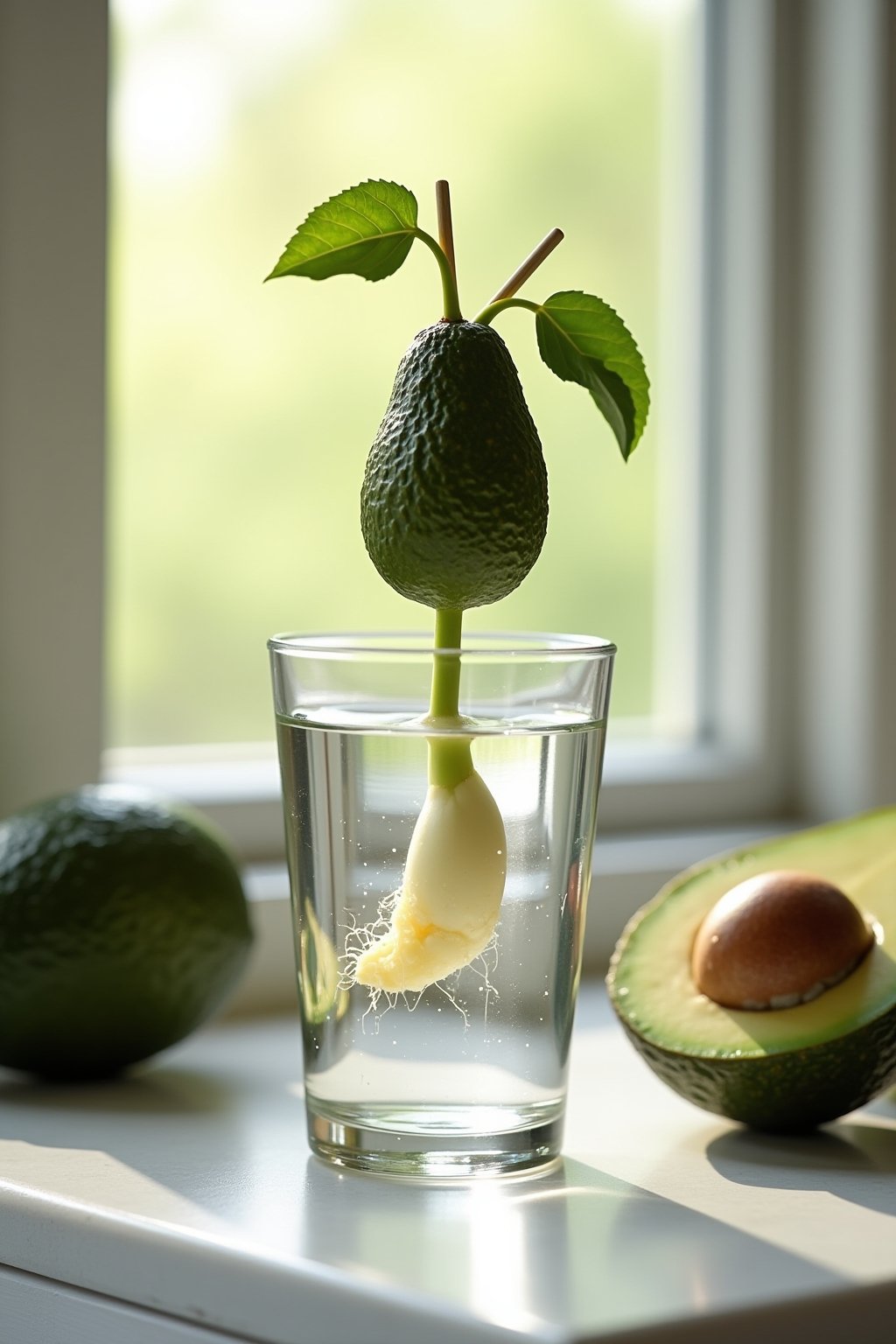
Growing an avocado tree from a pit is one of those garden projects that feels like actual magic. You take the seed from an avocado you just ate for lunch, stick some toothpicks in it, suspend it over water, and watch it crack open and send out roots and a stem over the next few weeks. It is one of the most satisfying things you can grow at home.
Now, a reality check: an avocado tree grown from a pit can take 5-15 years to produce fruit, and many never do. But that does not matter because avocado trees make stunning houseplants with big, glossy tropical leaves. They grow quickly, they are interesting to watch, and growing one from a kitchen scrap is a great project for kids and adults alike. Here is the complete guide to getting it right.
Quick Facts
| Sun | Bright indirect light (full sun outdoors in warm climates) |
| Difficulty | Beginner |
| Season | Start any time indoors |
| Zone | USDA Zones 9-11 outdoors (indoor houseplant anywhere) |
| Time to Harvest | 5-15 years for fruit (if ever) — grow it as a beautiful houseplant |
What You Need for How to Grow an Avocado Tree From a Pit (Complete Guide)
- Fresh avocado pit (from a ripe Hass avocado)
- 3-4 toothpicks
- Glass or jar filled with water
- Small pot (6-8 inch) with drainage holes
- Well-draining potting mix (cactus/succulent mix works well)
- Bright window (south-facing ideal) or grow light
- Liquid houseplant fertilizer
Use a fresh pit from a ripe avocado — the fresher, the better for germination. Wash off all the fruit flesh and let the pit dry for a day or two. The brown outer skin may peel off; this is fine.
Hass avocados are the most common variety at grocery stores and work perfectly for this project. The pit should be firm and undamaged — avoid pits with deep cracks or soft spots.
Patience is key: Germination takes 2-8 weeks. Some pits sprout in 2 weeks, others take 2 months. Don’t give up too quickly.
Step 1: Prepare the Pit for Sprouting
Wash the avocado pit under warm water and gently remove any remaining fruit flesh. Identify the top (slightly pointed end) and bottom (flatter, wider end) — the root will emerge from the bottom and the stem from the top.
Insert 3-4 toothpicks into the middle of the pit at a slight downward angle, evenly spaced around the circumference. These will act as a scaffold to suspend the pit over water. The toothpicks should go about 1/4 inch into the pit — deep enough to hold firmly but not so deep they crack it.
Step 2: Suspend Over Water
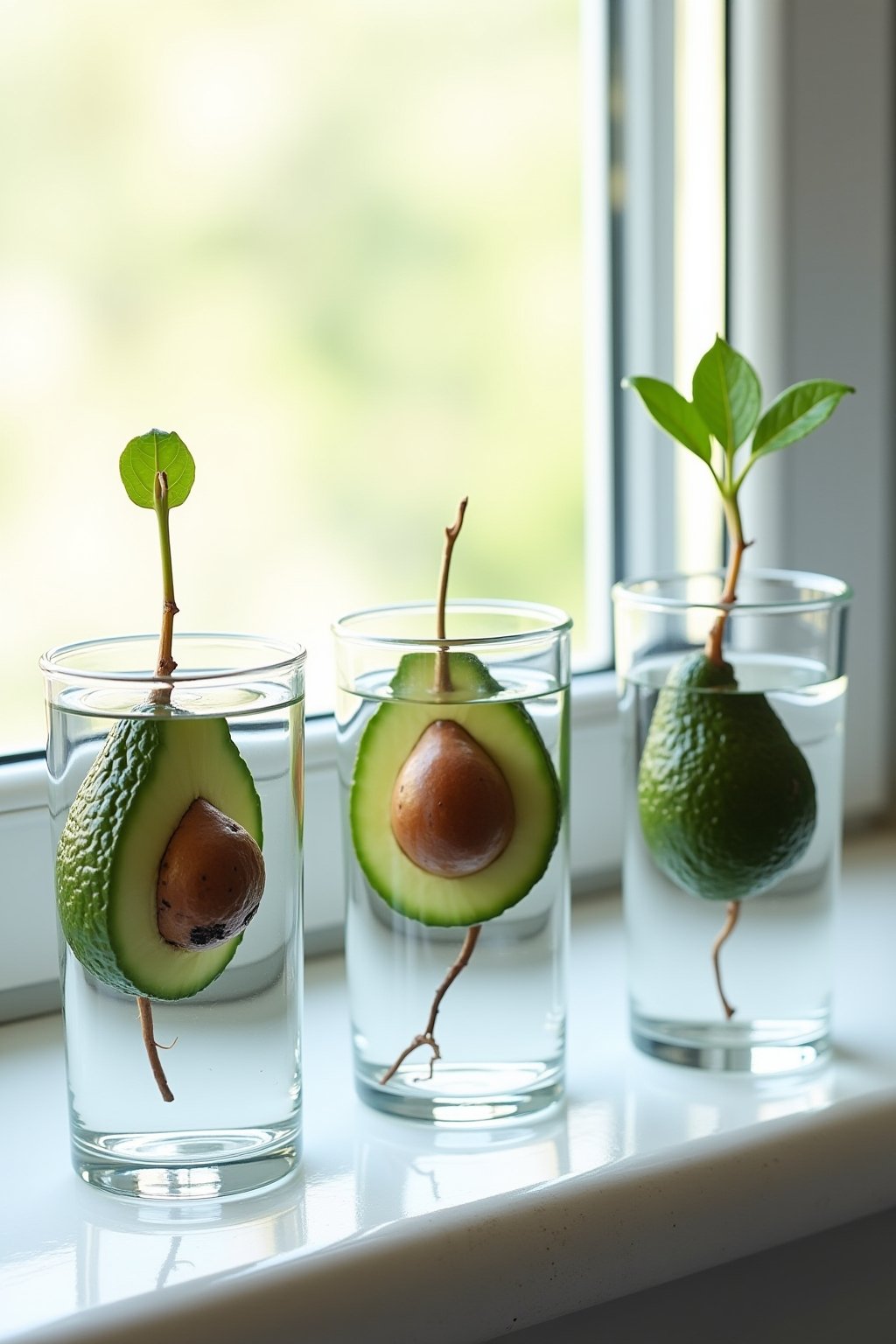
Fill a glass or jar with room-temperature water and rest the pit on the rim with the toothpicks supporting it. The bottom half of the pit should be submerged in water. The top half stays above water and exposed to air.
Place the glass on a warm, bright windowsill but not in direct scorching sunlight. Change the water completely every 5-7 days to prevent bacterial growth and algae. Top off water between changes if the level drops below the bottom of the pit.
Step 3: Wait for Roots and Stem (2-8 Weeks)
Within 2-8 weeks, the pit will crack open from the bottom, and a white taproot will emerge and grow downward into the water. Shortly after, a green stem will push up from the top of the pit. This is an exciting moment — your avocado tree has officially started growing.
Let the root grow to at least 3 inches long and the stem to 6-7 inches tall before the next step. If the stem grows tall but looks spindly, pinch off the top set of leaves to encourage bushier growth. This feels counterintuitive but it forces the plant to branch out instead of growing tall and leggy.
Step 4: Plant in Soil
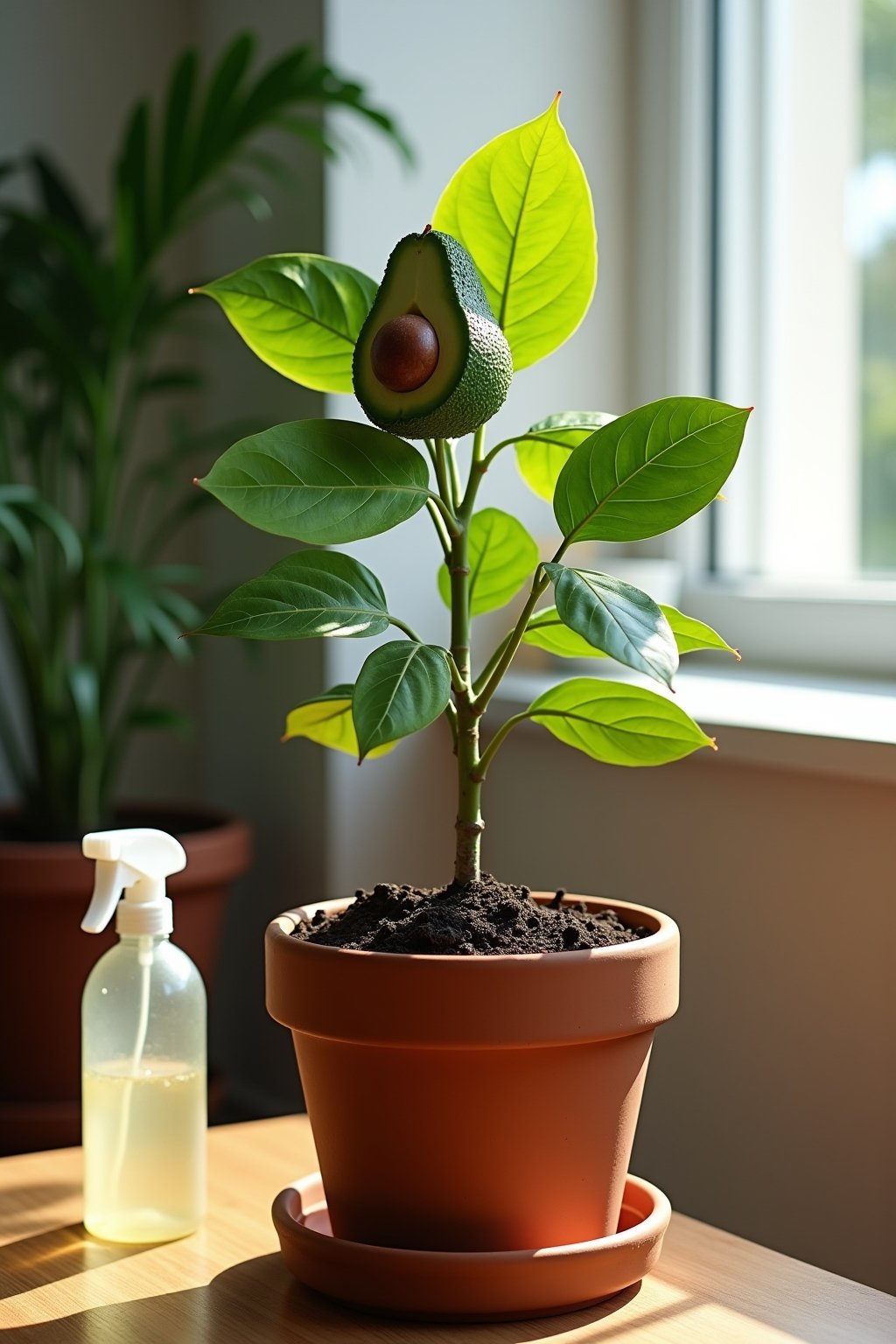
Once the root is 3+ inches and the stem is 6+ inches, it is time to plant in soil. Fill a 6-8 inch pot (with drainage holes) with well-draining potting mix. Cactus/succulent mix works great, or mix regular potting soil 50/50 with perlite for extra drainage. Avocado roots rot easily in heavy, soggy soil.
Make a hole in the center of the soil and plant the pit so the top half is exposed above the soil surface. The roots should be buried but the top of the pit stays visible. Water thoroughly and place in the brightest spot in your home.
Step 5: Ongoing Care for Your Avocado Tree
Avocado trees want bright light, consistent moisture, and good drainage. Water when the top inch of soil feels dry — usually once or twice a week. Yellow leaves mean overwatering; brown crispy leaf edges mean underwatering or low humidity.
Feed with liquid houseplant fertilizer every 2-4 weeks during spring and summer. Stop fertilizing in winter when growth slows. Mist the leaves occasionally or place the pot on a pebble tray with water to increase humidity — avocados are tropical plants that appreciate moisture in the air.
Step 6: Encourage Bushy Growth With Pruning
Without pruning, an avocado tree grows as a single tall stem with leaves only at the top. To create a fuller, bushier plant, pinch or cut the growing tip whenever the stem reaches 12 inches. This forces side branches to develop. Repeat this process on side branches as they grow to build a dense, attractive shape.
In warm climates (zones 9-11), you can eventually move your avocado outdoors permanently. In colder areas, treat it as a houseplant that can vacation outside during summer. Bring it back indoors before temperatures drop below 50°F.
Common Problems and How to Fix Them
Pit won’t sprout after 8 weeks: Some pits simply aren’t viable. Try again with a fresh pit from a different avocado. Make sure the bottom is submerged and you’re changing water regularly. Warmer conditions speed germination.
Stem is tall and leggy: Not enough light. Move to a brighter spot or add a grow light. Pinch the top to encourage branching instead of upward growth.
Leaves turning brown at tips: Low humidity or inconsistent watering. Mist leaves regularly, use a pebble tray, and water consistently — don’t let the soil swing between bone dry and soaking wet.
Will my tree produce fruit? Trees from pits can take 5-15 years to fruit, and many never do because they need cross-pollination. If you want fruit, buy a grafted avocado tree from a nursery. Enjoy your pit-grown tree as a beautiful houseplant.
Seasonal Guide
Spring-Summer: Active growing season. Water consistently, feed every 2-4 weeks, and give maximum light. This is the best time to prune for shape and encourage branching. Move outdoor avocados outside after last frost.
Fall: Growth slows. Reduce watering slightly and stop fertilizing. Bring outdoor plants inside before temperatures drop below 50°F.
Winter: Growth is minimal. Water less frequently (when top 2 inches of soil are dry). Keep in the brightest window. Do not fertilize. Low humidity from indoor heating can cause brown leaf tips — mist regularly or use a humidifier.
Year-round: You can start a new pit in water any time of year — it grows indoors regardless of season. Spring and summer pits tend to germinate faster due to warmer temperatures.
Expert Tips
- Change the water religiously — stagnant water grows bacteria that coats the pit and prevents root emergence. Fresh water every 5-7 days is essential for successful germination.
- Pinch the growing tip at 12 inches — this is the single most important step for a good-looking avocado tree. Without pinching, you get a tall stick with a tuft of leaves on top instead of a bushy, attractive plant.
- Use well-draining soil — avocado roots are extremely susceptible to root rot. Cactus mix or a 50/50 blend of potting soil and perlite prevents the waterlogging that kills most indoor avocado trees.
- Bright light is non-negotiable — avocados need the brightest spot in your home. A south-facing window is ideal. If leaves are pale or growth is slow, supplement with a grow light.
- Don’t expect fruit — grow it as a beautiful houseplant and be pleasantly surprised if it ever fruits. The joy is in the process and the gorgeous tropical foliage, not the harvest.
- Start multiple pits at once — not every pit will sprout. Starting 3-4 at the same time ensures at least one success, and you can give extras to friends.
Frequently Asked Questions
How long does it take for an avocado pit to sprout?
Most avocado pits sprout in 2-8 weeks, with the average being about 3-4 weeks. Some take longer. Change the water regularly, keep the pit warm, and be patient. If nothing has happened after 8 weeks, start a new pit.
Will my avocado tree produce fruit?
Trees grown from pits can take 5-15 years to produce fruit, and many never do because they lack cross-pollination from a second tree. If you want avocado fruit, buy a grafted dwarf variety from a nursery — these can fruit in 2-3 years. Enjoy your pit-grown tree as a beautiful houseplant.
Can I grow an avocado tree indoors permanently?
Yes! Avocado trees make excellent indoor plants in any climate. They won’t fruit indoors (too little light and no pollination), but they grow into attractive trees with large glossy leaves. Give them the brightest window possible and maintain humidity.
Why did my avocado pit crack but nothing is growing?
The crack is actually a good sign — it means the root is starting to push through. Give it more time. Keep the bottom submerged in fresh water and wait. The root may take another 1-2 weeks to become visible after the initial crack appears.
Should I peel the brown skin off the pit?
You can leave it on or peel it off — both work. Some gardeners find that removing the brown skin slightly speeds up germination because water can penetrate the pit more easily. If it’s already peeling naturally, go ahead and remove it.
How big will my avocado tree get indoors?
Indoors, avocado trees typically grow 5-8 feet tall if given enough light. Regular pruning keeps them at a manageable size and encourages bushier growth. Without pruning, they tend to grow tall and thin. Outdoors in warm climates, they can eventually reach 30-60 feet.