
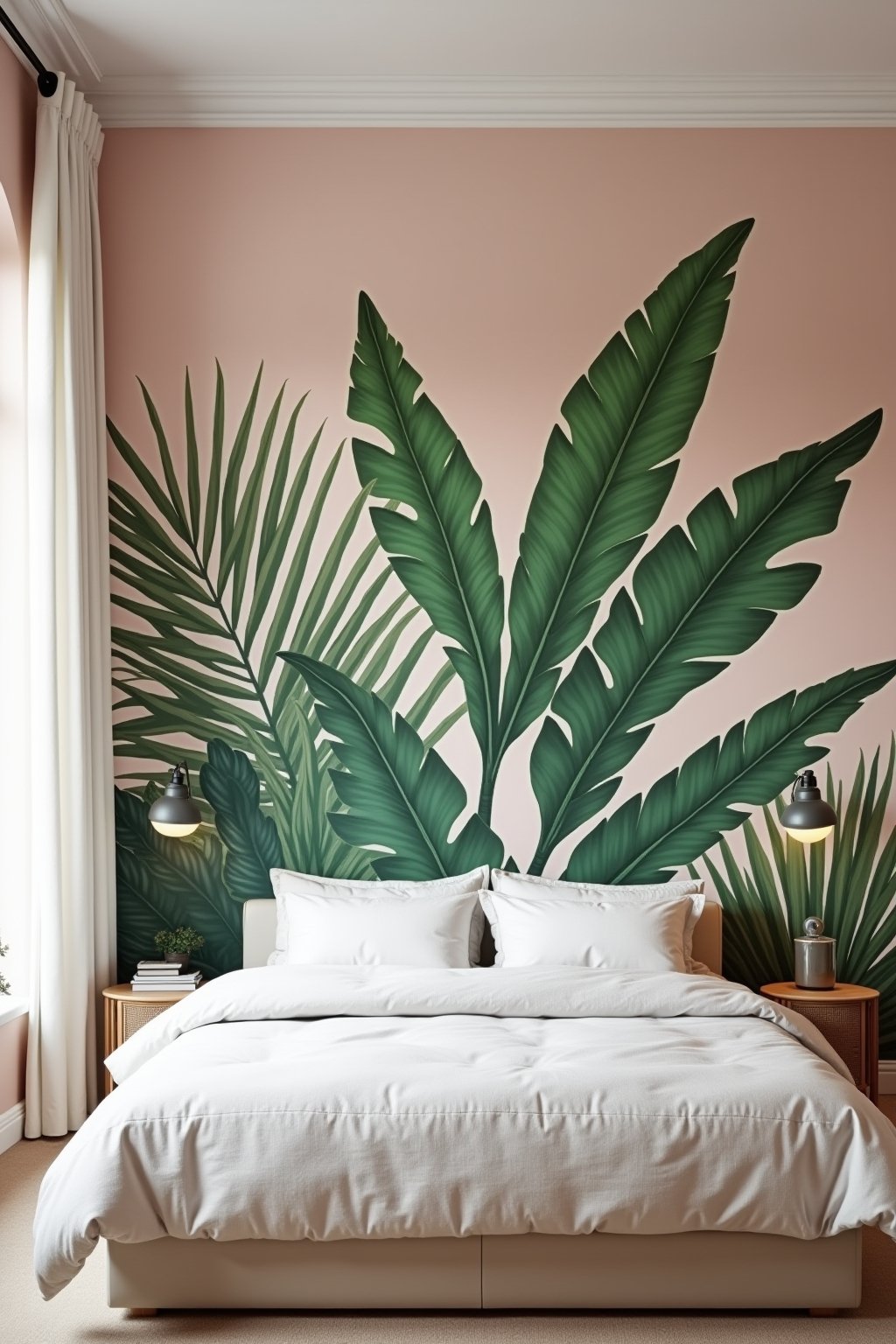
The first botanical mural I painted was in my powder room, and honestly, it was terrifying. But the result — giant painted leaves climbing up a soft pink wall — made that tiny room feel like a secret garden. You don’t need art school training to pull this off.
DIY wall murals are exploding on Pinterest as people realize that a painted wall costs a fraction of wallpaper and creates something truly one-of-a-kind. Botanical motifs are the most popular choice because they’re forgiving (nature isn’t symmetrical), beautiful, and surprisingly achievable for beginners.
Why This Works
- Cheaper than wallpaper — paint and brushes cost a fraction of designer botanical wallpaper
- Completely unique — no two hand-painted murals are identical
- Forgiving for beginners — botanical shapes are organic and irregular, so imperfections look intentional
- Scalable commitment — paint one small wall, a corner, or an entire room
- Can be painted over — if you don’t love it, two coats of paint and it’s gone
What You’ll Need
Supplies for a botanical wall mural:
- Wall paint — for the base color (soft pink, sage, cream, or white)
- Craft acrylic paints — in greens, browns, and accent colors for the botanical design
- Various brush sizes — large flat for leaves, thin round for stems and details
- Pencil and eraser — for sketching the design before painting
- Projector — optional, for projecting a design onto the wall to trace
- Reference images — photos of the plants or leaves you want to paint
Step-by-Step Guide
Choose Your Botanical Style
Popular options include: oversized tropical leaves (monstera, palm), delicate wildflower meadow, climbing vine or ivy, olive branches, or eucalyptus sprigs. Choose a style that matches your room’s vibe — tropical for bold, wildflower for cottage, eucalyptus for modern.
Collect 5-10 reference images and decide if you want a full wall coverage or a partial design (like plants climbing from one corner).
Prep and Paint Your Base
Paint the entire wall in your base color. Soft pink, sage green, warm cream, or white all work beautifully as backgrounds for botanical designs. Let the base dry completely — at least 24 hours before starting the mural.
A satin or eggshell finish base coat is easiest to paint over if you need to correct mistakes.
Sketch Your Design
Lightly sketch the main shapes with pencil directly on the wall. Start with the largest elements first — big leaves, main branches — then fill in smaller details. Don’t worry about perfection. The beauty of botanicals is their organic irregularity.
If you’re not confident freehand, use a projector to project an image onto the wall and trace the outlines.
Paint Large Elements First
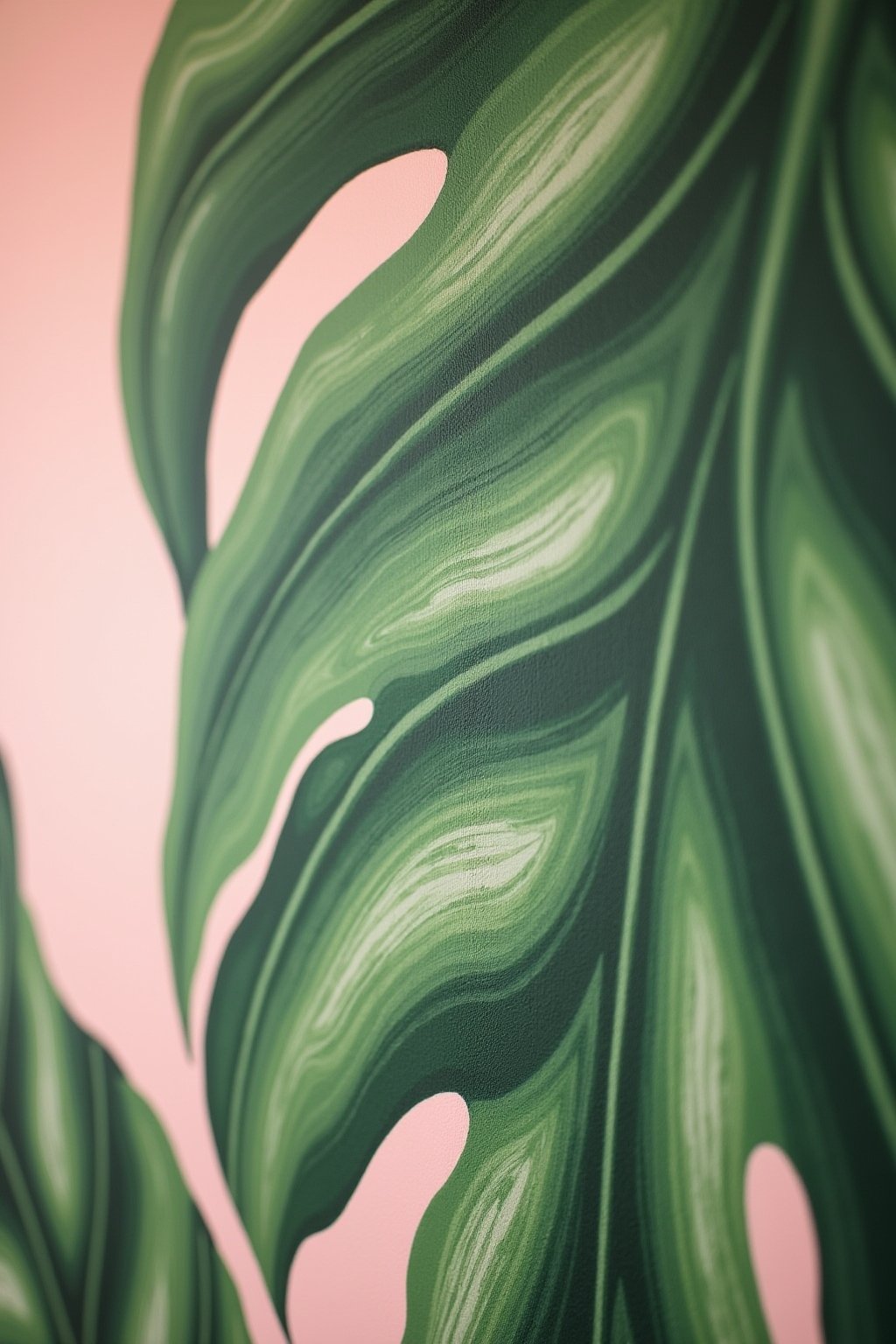
Using a large flat brush, fill in the biggest shapes — large leaves, main stems. Work with confident strokes. Two shades of green (a darker and lighter) create natural dimension on leaves.
Step back after each major element to check placement and proportion. It’s easier to adjust early.
Add Details and Finishing Touches
Use a thin brush to add veins on leaves, thin stems, small berries or flowers, and any fine details. These finishing touches are what make the mural look professional and complete.
Once everything is dry, you can add a clear matte varnish over the mural for durability, especially in high-traffic areas.
Common Mistakes to Avoid
- Starting too small — tiny details on a big wall look timid. Go bigger than you think for impact
- Using only one shade of green — real plants have multiple greens. Use at least 2-3 shades for depth
- Making everything symmetrical — nature is asymmetrical. Let branches reach in unexpected directions
- Overthinking the design — the beauty of hand-painted murals is their imperfect, handmade quality. Embrace it
- Not stepping back frequently — wall art is meant to be seen from a distance. Check your progress from across the room regularly
Budget Tips
Botanical murals are remarkably affordable:
- Craft acrylic paint ($3-5 per tube) is all you need for the design
- A set of brushes ($10-15) from a craft store covers all sizes
- Use a phone projector ($20-30) if you want to trace a design
- The base wall paint is likely already in your garage from painting the room
- Total cost for a botanical mural: $30-60 vs. $200+ for designer botanical wallpaper
Styling Tips
- Extend botanicals around a corner — wrapping the design around a corner or onto the ceiling adds dimension
- Coordinate one real plant with your mural — a potted monstera next to a painted monstera is charming
- Keep furniture simple against the mural — the wall art is the star, so use minimal, neutral furniture nearby
- Add depth with multiple green shades — background leaves in muted tones, foreground leaves in brighter greens
- Include unexpected details — a painted butterfly, a small bird, or a dragonfly adds whimsy
- Frame the mural with your furniture — position a bed, desk, or sofa so the mural rises behind it as a headboard or backdrop
Room-by-Room Inspiration
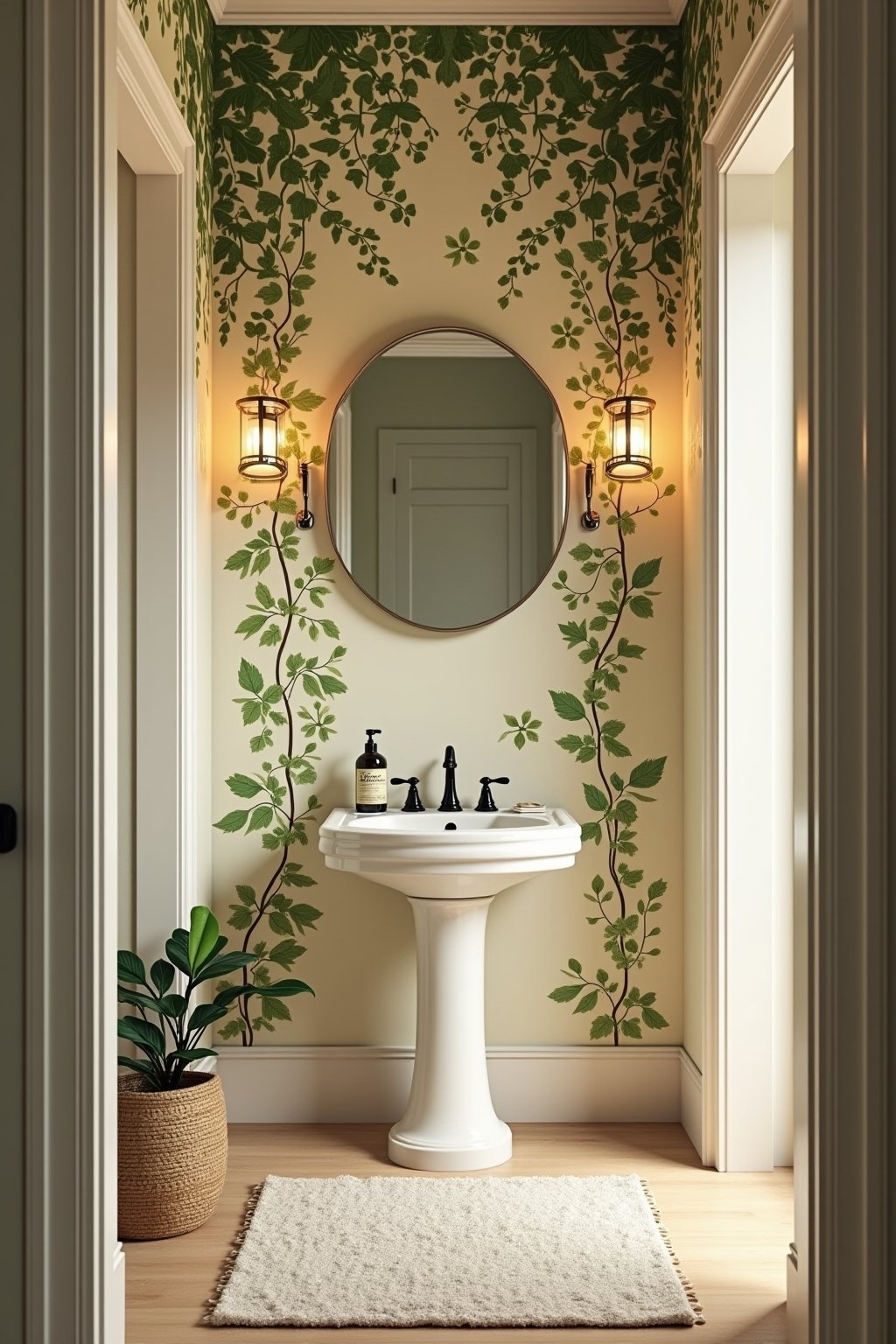
Powder Room
The perfect starter mural room — it’s small, so the mural is manageable, and the wow factor for guests is huge. Paint oversized tropical leaves on a soft pink or cream base.
Bedroom
A botanical mural behind the headboard creates a natural canopy effect. Eucalyptus or olive branches on a soft sage base feel calming and organic.
Nursery
Gentle botanical murals in soft colors are one of the most popular nursery trends. Watercolor-style florals or simple leaf patterns create a sweet, nature-inspired space.
Frequently Asked Questions
Do I need to be an artist to paint a botanical wall mural?
No. Botanical shapes are organic and irregular, making them very forgiving. Start with simple leaf shapes, use a projector to trace if needed, and remember that nature isn’t perfect — neither should your mural be.
What paint should I use for a wall mural?
Regular craft acrylic paint works well for most murals. For high-traffic areas like kitchens or hallways, use interior wall paint mixed with craft paint for durability, then seal with a clear matte varnish.
How long does it take to paint a botanical mural?
A small accent mural (like one corner with climbing vines) takes 3-5 hours. A full wall with detailed botanicals takes 8-15 hours spread over a weekend. Simple designs are faster than intricate ones.
Can I paint a mural on textured walls?
Yes, but very heavy textures make detail work harder. Light orange peel texture works fine. For heavily textured walls, choose a design with larger shapes and less fine detail.
How do I fix mistakes on a wall mural?
Let the mistake dry, then paint over it with the base wall color. Once the correction dries, repaint the botanical element. This is much easier than fixing wallpaper, which is one major advantage of painted murals.
Will a botanical mural damage my walls?
No more than any other paint. If you want to remove it later, simply paint over it with your wall color. Two coats over a mural will cover it completely, returning the wall to its original state.